Gaming: After Two Years And Over 6,000 Hours, Monitors Unboxed's Long-term...
Keep up to date with the most important stories and the best deals, as picked by the PC Gamer team.
We've been tracking various long-term OLED monitor burn-in tests in our own mini meta series of reviews over the last two years. Until now, the message has been pretty consitent. OLED burn-in is real but barely a problem. Now, at the two-year mark, there's arguably a subtle shift in the narrative that needs to be recorded. Burn-in does appear to eventually become more problematic. How problematic? That's a subjective call.
The latest data point comes from YouTube channel Monitors Unboxed, which has uploaded its latest 24-month update. As before, Monitors Unboxed's testing represents something of a worse-case scenario for OLED wear thanks to primary usage that majors on static productivity apps for around 60 hours a week with Windows in Light mode, but with a dark taskbar.
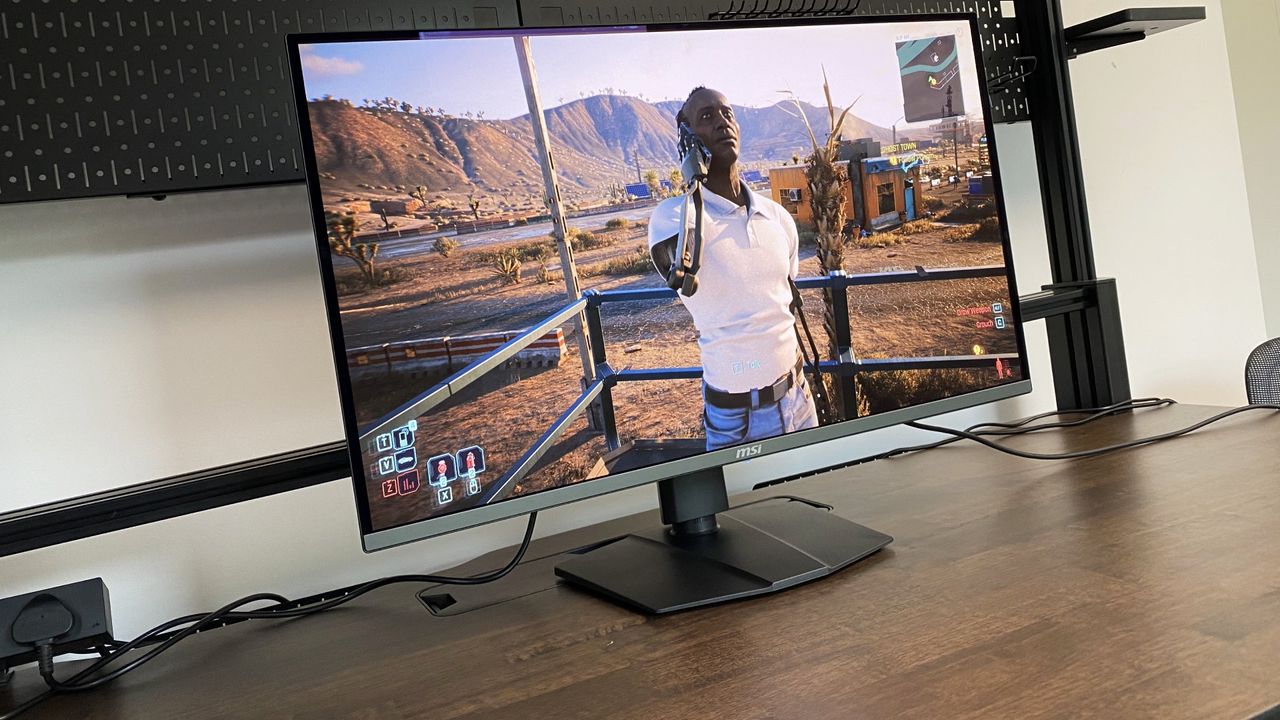
The idea is that few measures have been taken to reduce burn in, instead the monitor has been used much as any LCD display might be. Again, all the testing is based on the MSI MPG 321URX QD-OLED, which I reviewed way back in early 2024 and uses a Samsung QD-OLED 32-inch 4K panel. All told, Monitors Unboxed's testing is now at the two-year mark with over 6,000 hours of uptime.
For the most part, the Samsung panel continues to show progressive but very gradual degradation over the six-month, 12-month, 18-month and 24-month assessment periods. Most obviously, there's a faint line down the centre of the panel due to multitasking with two application windows, plus some burn-in along the bottom due to the taskbar.
But there are some nuances. At 24 months, Monitors Unboxed found the beginnings of icon-specific burn-in along the taskbar at the bottom of the screen. It's only slight and the details of the icons can't be made out. But they are just visible against some backgrounds.
When it comes to the mechanics of how this all works, it turns out that it's the green subpixels that take the biggest hammering, with the least wear visible from the red subpixels. This causes a very slight colour temperature shift over time from 6,441K when new to 6,341K at 18 months.
However, at 24 months, the colour temperature had somewhat reverted to 6,386K. This could be the pixel compensation cycles doing their thing. But, whatever, this is only a small drift in colour temperature that is unlikely to be subjectively noticeable.
Keep up to date with the most important stories and the best deals, as picked by
Source: PC Gamer