Gaming: Breaking Cherry Xtrfy Mx 8.2 Pro Tmr Tkl Review
TMR may just be the "future of magnetic keyboards", but Cherry is perhaps a little too early to that future, and a lot too expensive.
PC Gamer's got your back
Our experienced team dedicates many hours to every review, to really get to the heart of what matters most to you. Find out more about how we evaluate games and hardware.
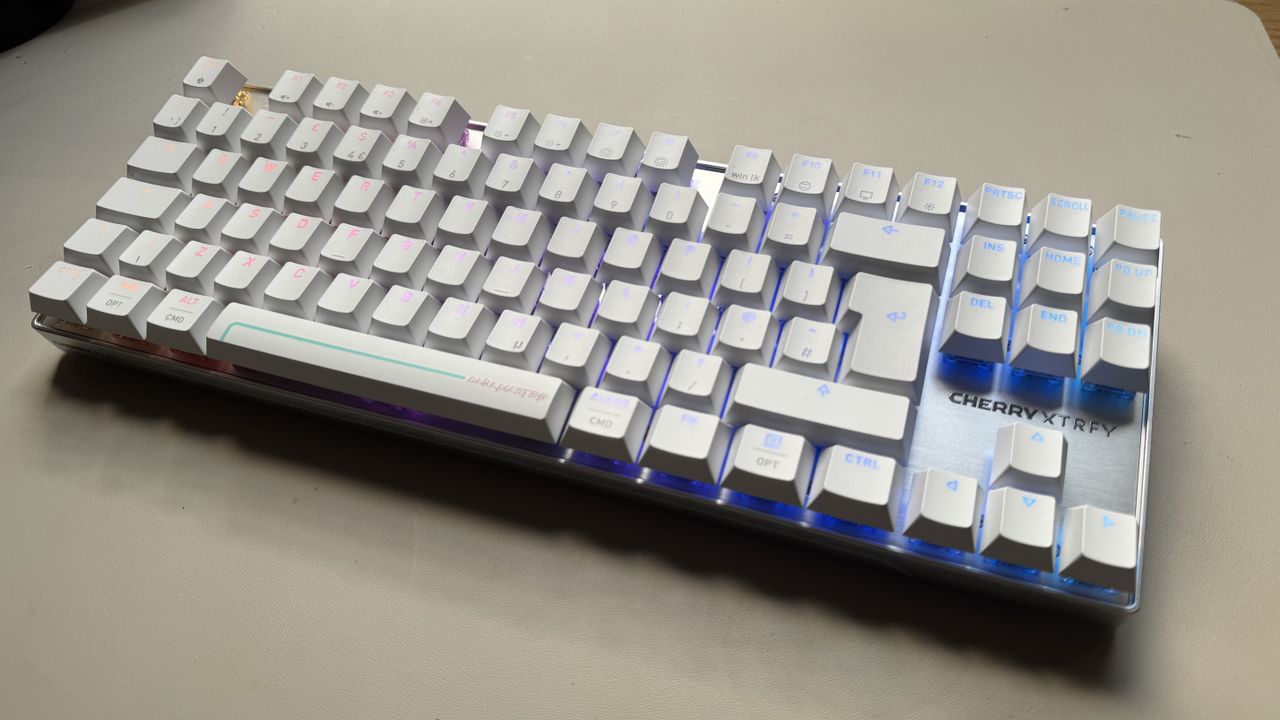
You really have to offer something special to charge $250 for a keyboard. Even more so for one that's TKL. The white Cherry Xtrfy MX 8.2 Pro TMR TKL (say that three times fast) looks a bit garish and costs a lot of money, but offers a better second impression than a first one.
It's undeniably a very firm bit of kit, and a sturdy top plate means it's not weak to any flex (trust me, I tried). It has a rather hefty weight and feels strong on a desk. Its aesthetic, one that is plastered with white, blue, silver, and a somewhat dated vaporwave logo, doesn't appeal to me, though. It's covered in RGB, which is often make or break for a keyboard, and I can't say it makes the MX 8.2 Pro.
That RGB can be controlled in the Cherry Mag Crate software, which is fairly intuitive. It did default to Chinese with the link on the Cherry website, but that's since been fixed. Importantly, this software allows you to get the most out of the unique TMR magnetic sensors in the board itself.
Effectively, TMR (or tunnel magnetoresistance) is a sensing technology that detects motion due to electrical resistance. It's an incredibly sensitive, accurate tech, beating out traditional mechanical and even Hall effect keyboards. It's already becoming a standard in controllers, and I can see it becoming more and more popular in keyboards, too.
Size: TKLSwitches: Cherry MK Crystal MagneticConnectivity: 2.4 GHz wireless, Bluetooth, and wiredKeycaps: Double-shot PBTBattery Life: Up to 300 hours in Bluetooth modeHot-swappable switches: YesAnti-ghosting: YesPolling rate: Up to 8,000 Hz Dimensions: 350 x 120 x 40 mm Media controls: NoPrice: $250 / €230
With TMR, you're getting faster response times, lower battery consumption, and higher sensitivity. But all of the above is already pretty darn great with the similar magnetic-based tech of Hall effect in the first place. As a replacement for the old guard, TMR is definitely the way to go, but is it worth all that extra cash?
My money says not right now. This is especially true if we consider how both mechanical and Hall effect keyboard prices have continued to drop since their introduction.
Cherry claims a preci
Source: PC Gamer