Breaking Zsa Voyager + Navigator Review
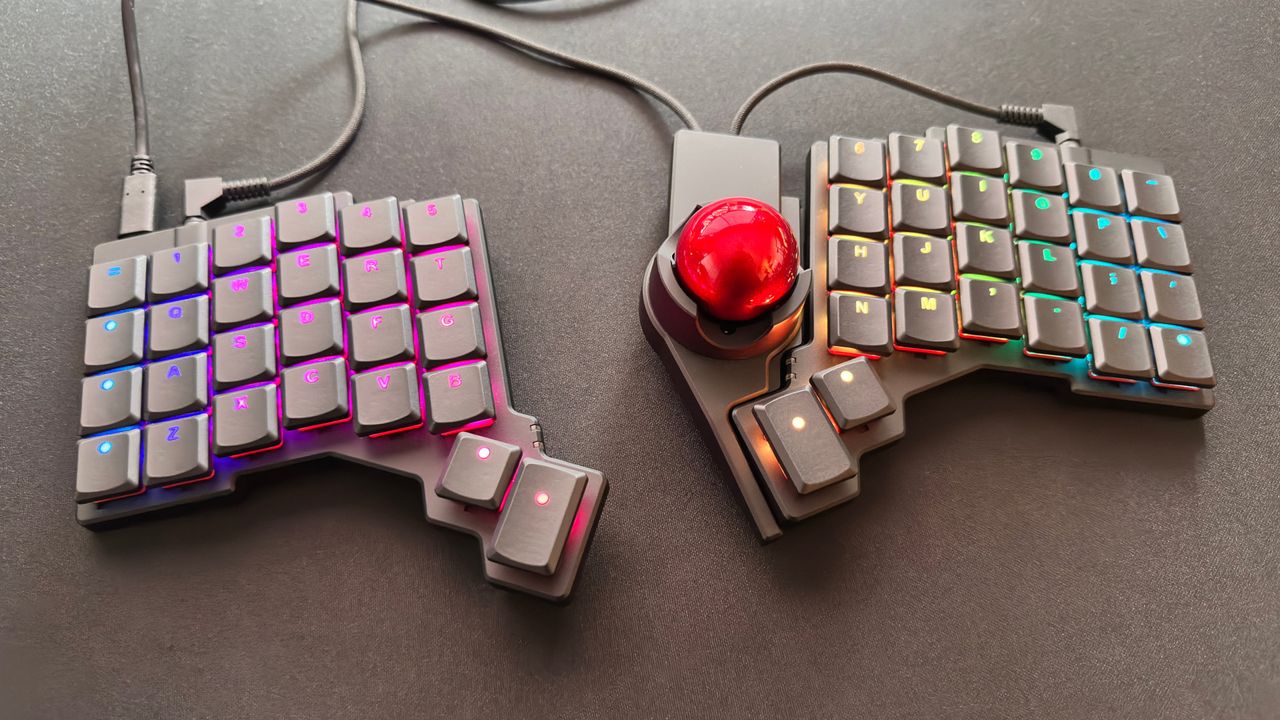
As minimal and compact as you could possibly get, the ZSA Voyager is too compromised to be a perfect keyboard for all people and all use cases. But if you want to maximise your desktop space or need something for light travelling, then this could be the keyboard for you. Shame the Navigator trackball isn't as good.
PC Gamer's got your back
Our experienced team dedicates many hours to every review, to really get to the heart of what matters most to you. Find out more about how we evaluate games and hardware.
It's been nearly two years since I reviewed the ZSA Moonlander, and it's still a keyboard that I rate very highly. Sure, it's expensive and difficult to get used to, but if you can afford one and commit to its steep learning curve, I reckon it's one of the very best ergonomic keyboards around. So when ZSA offered to send over its Voyager keyboard, along with its new Navigator trackball module, I had high expectations.
Essentially, the Voyager is a pared-down Moonlander, with all excess fat trimmed away to leave as minimal a keyboard as possible. "Laptop-friendly," says ZSA's marketing. "Goes anywhere—on your desk or on the road." I certainly can't argue with that because with just 52 keys and a total thickness of just 16 mm (0.62 inches), the Voyager is as whisper-thin as you could want.
However, both the thickness and key count result in some notable compromises. For example, there's no wireless connectivity option because batteries would add to the weight, cost, and size of the keyboard. With such few keys, you have to make full use of the Voyager's layer system to access standard options such as function keys.
On the plus side, the ZSA Voyager comes with multiple USB cables of different lengths, though only one long TRRS cable to connect the two keyboard halves. You also get an additional 34 keycaps in the box, plus two more thumb keys, should the original ones break. That does mean you can heavily customise the Voyager without having to spend any more money, and the soft carry case it all comes in is a nice touch.
Switches: Kailh Choc Brown, Pro Red, Red, or WhiteConnectivity: wired (USB Type-A)Keys: 52 in totalSplit: fully separate halvesTenting: 0 or 5 degrees, via magnetic feetTilting: noneBacklighting: per-key RGBMedia controls: programmable shortcut keysPrice: $365
While the Moonlander sports legs to continuously adjust the amount of tenting, the Voyager just uses four small feet that magnetically attach (there's a metal bar in the c
Source: PC Gamer