Cyber: Edr, Email, And Sase Miss This Entire Class Of Browser Attacks
Most enterprise work now happens in the browser. SaaS applications, identity providers, admin consoles, and AI tools have made it the primary interface for accessing data and getting work done.
Yet the browser remains peripheral to most security architectures. Detection and investigation still focus on endpoints, networks, and email, layers that sit around the browser, not inside it.
The result is a growing disconnect. When employee-facing threats occur, security teams often struggle to answer a basic question: what actually happens in the browser?
That gap defines an entire class of modern attacks.
At Keep Aware, we’ve called this a “safe haven” problem for attackers, where the target has now become this central point of failure
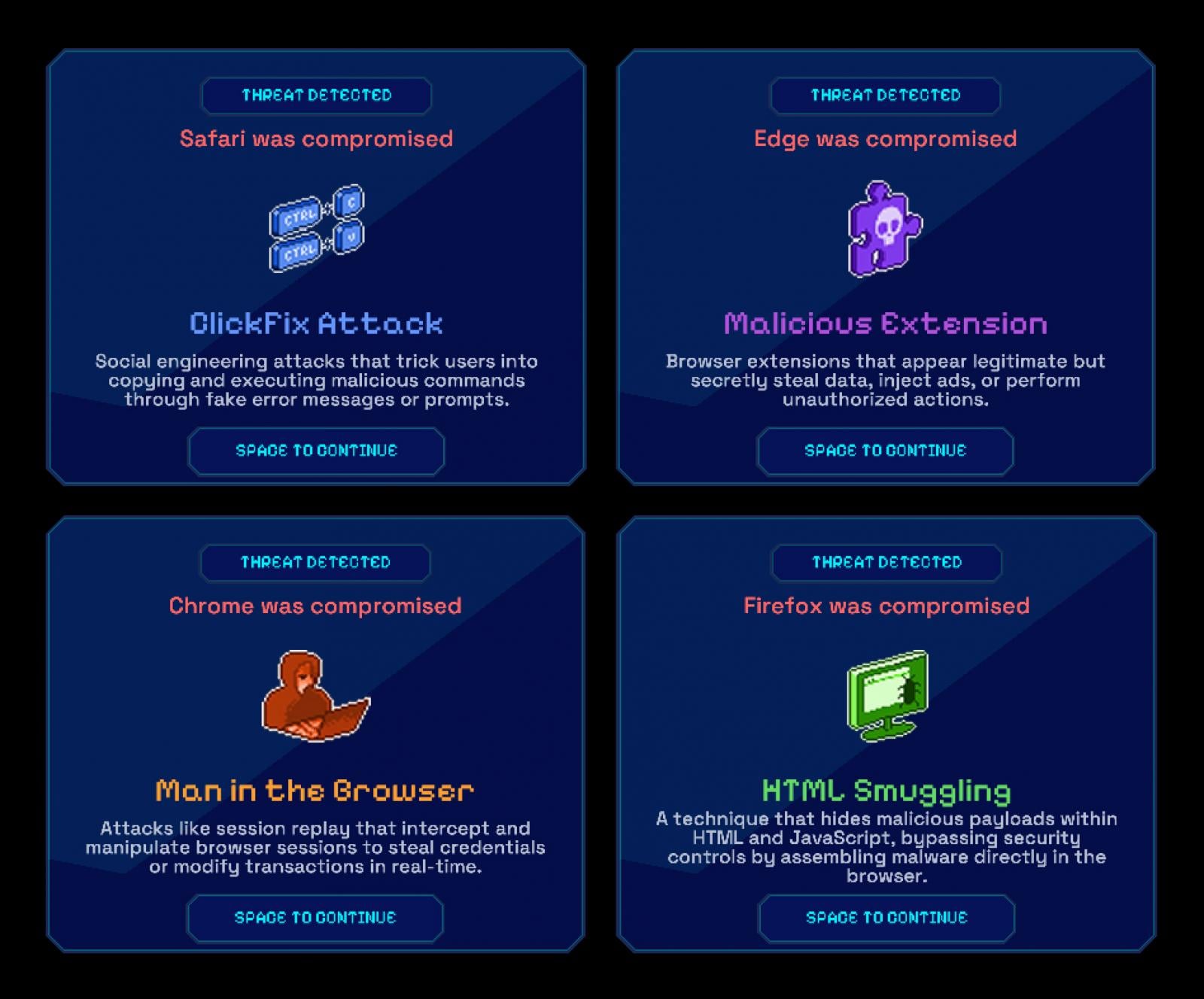
What makes browser-only attacks hard to deal with isn’t a single technique. It’s that multiple attack types all collapse into the same visibility gap. We continue to see these attacks into 2026:
Possibly the largest browser-driven attack vector in 2025, users are guided by fake browser messages or prompts to copy, paste, or submit sensitive information themselves. No payload is delivered, no exploit fires, just normal user actions that leave almost no investigation trail.
Seemingly legitimate extensions are installed intentionally and then quietly observe page content, intercept form input, or exfiltrate data. From an endpoint or network perspective, everything appears to be normal browser behavior. When questions arise later, there’s little record of what the extension actually did.
These attacks abuse valid browser sessions rather than exploiting systems. Credentials are entered correctly, MFA is approved, and activity appears authorized. Logs confirm a real user and a real session, but not whether the browser interaction was manipulated or replayed.
Malicious content is assembled directly inside the browser using JavaScript, bypassing traditional download and inspection points. The browser renders content as expected, while the most critical steps never become first-class security events.
Source: BleepingComputer