Fallout Co-creator Tim Cain Says Canon Is 'whatever The Owner Of...
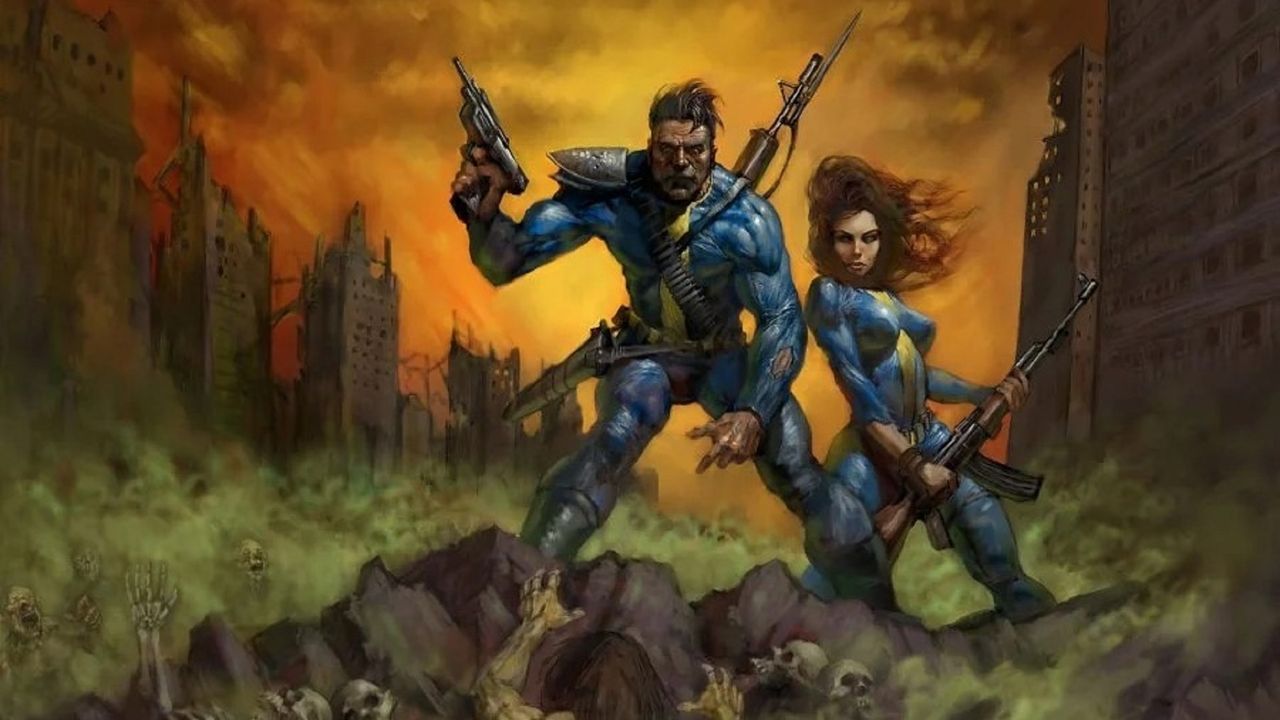
Cain used his long-running vlog series to discuss the lines between text, interpretation, and authorial intent.
There's a character in Fallout dating back to the original game called Harold. He's a sorry sight, mutated beyond recognition with a sapling growing out of his exposed cranial innards, but how he got that way isn't clear.
Fans have speculated for years as to whether he's a virus-infected mutant, a radiation-poisoned ghoul, both, or neither, and Fallout co-creator Tim Cain has weighed in on the debate with a larger point: any interpretation is right, so long as it's designated as such.
He said as much in a video uploaded to his YouTube channel yesterday—the same channel where he routinely shares insights and commentary from his entire body of gamedev work, including everything from the original Fallout to Wildstar and The Outer Worlds. The new video, titled "Let's Talk About Canon," gets into the weeds as to what counts as canon in a narrative and what doesn't.
To summarize, his argument is thus: canon is "whatever the owner of the IP says it is," an individual's interpretation is personal and freeform and therefore "you can't be wrong," and authorial intent is another matter altogether that usually differs from team member to team member, and may even diverge greatly from canon. Each perspective is in conversation with one another, but the lines are clear to see and significant.
Circling back to Harold, Cain said in his video that "Canon is what it is. If the people who own [Fallout] say Harold's a ghoul, he's a ghoul. I still think he's a weird thing that's neither, but you may think he's a mutant. And we can all be right because that's the difference between canon, intent, and interpretation."
These discussions can get particularly fuzzy when talking about long-running game series, especially complex RPGs like Fallout, because a given game may have been worked on by dozens or hundreds of people. Where a short story may be the product of a single author and an editor or two, a big-budget videogame ultimately reflects the gestalt of countless perspectives, and as Cain points out in his video, plenty of narrative games openly contradict themselves for one reason or another.
Cain isn't convinced community sentiment has or should have much authority in determining a given game's canon. "If you're fond of Googling 'Death of the Author,' you might want to Google 'tyranny of the majority,' because I don't really think you want to have canon defi
Source: PC Gamer