Fallout: New Vegas Lead Writer Worries Caesar's Argument For...
Fascism's foothold in the wasteland mirrors the way it spreads in the real world.
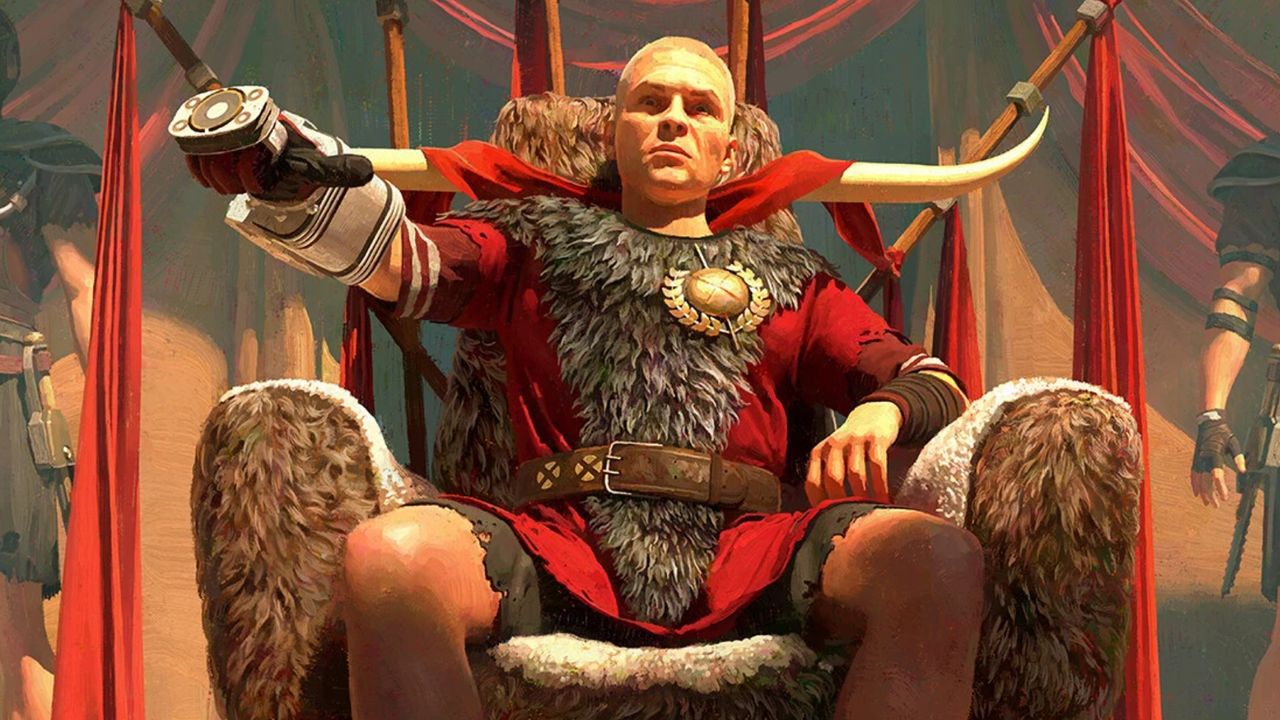
If you've played New Vegas, you're familiar with Caesar's Legion. Slavedriving, overtly fascistic, and wrapped in the aesthetics of the Roman Empire—but with football pads instead of lorica segmentata. It seems like the kind of faction that would be hard to present as anything but one-dimensional, abject evil.
As it turns out, giving the faction's leader some real substance—even allowing him to make his case in full—was lead writer John Gonzalez's precise objective, though he sometimes worries he did too good a job on that front.
"[I had] to write a character who had tried to present a robust argument for authoritarianism," he told PC Gamer associate editor Ted Litchfield. But now, after seeing the rise of fascist movements in the intervening 15 years? "I was like, could we back off of that now?"
"One of the things about writing fiction, if you're going to try to write it in a way that's not preaching to a choir, or that's not propaganda," Gonzalez argued, "is that you have to try to make your adversaries as strong as possible.
"If you want to write a story where one of your main themes is actually freedom, like liberty from tyranny, you can't just make your tyrants cardboard villains. You have to make them as substantial as possible in some way. That was really the driving force with Caesar, but occasionally I've wondered if that was done a little too well."
If you haven't played New Vegas, you can meet with Caesar directly and pick his brain at length. He is a cruel nationalist and imperialist, but remarkably well spoken—partially owed to his education with the ironically humanist, pacifist faction, The Followers of the Apocalypse—and backs up his every action with detailed, if heartless and objectionable, political theory.
"Long-term stability at all costs," Caesar says in a notably self-serving and subjective assessment of the Pax Romana, Rome's golden age. "The individual has no value beyond his utility to the state, whether as an instrument of war, or production."
Keep up to date with the most important stories and the best deals, as picked by the PC Gamer team.
It's almost comical how deep the rabbit hole goes (the norm for Obsidian RPGs). When Caesar cites Hegelian dialectics, the player character can ask, "'Hegelian dialectics?' What's that?" and receive Caesar's full, if highly debatable and biased, explanation. Gonzales gives credit to Josh Sawyer for t
Source: PC Gamer