Gpu Prices Absolutely Are On Their Way Up But I've Found A Bunch Of
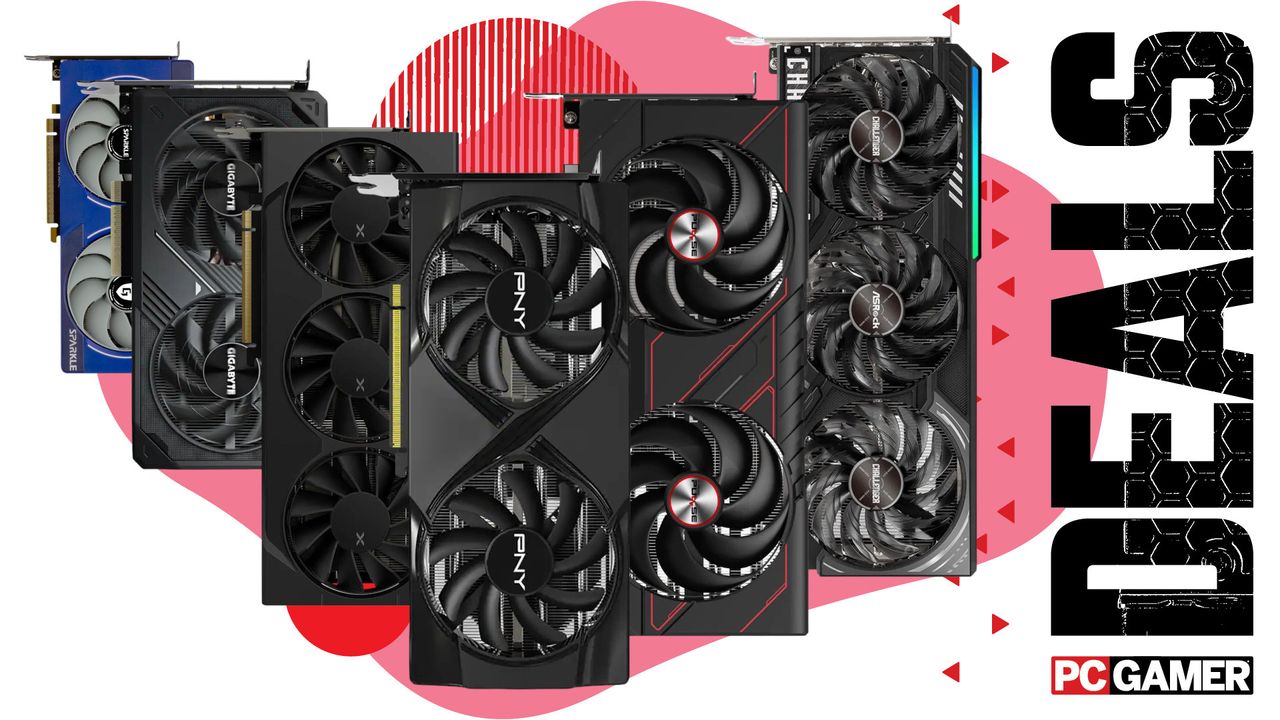
With the global memory shortage set to run throughout 2026 and probably well in 2027, prices of everything that requires DRAM are only going to rise. However, thanks to a wealth of graphics cards being in stock over the last quarter of 2025, GPUs have yet to significantly spike in price. Some models have risen but no matter what your budget is, there's a decent value option to be found.
Every week, I hunt down the best prices for Nvidia GeForce RTX 50-series, AMD Radeon RX 9000-series, and Intel Arc B-series graphics cards from all the major retailers. Below are the best cards to go for at each budget limit (i.e. $200, $300, and so on).
Intel's Arc B570 isn't the greatest graphics card around but a cent shy of $200, you'd have to step into the second market to find something better. The Battlemage architecture can be a bit funny when dealing with older games, but anything modern (i.e. DirectX 11 or 12-based) should be fine.
Better still, Intel's worked really hard on improving its drivers, and XeSS upscaling and frame generation are both very good. It's a shame more games don't support the technology but as long as Intel keeps on making Arc GPUs, we'll continue to see the catalogue of games with XeSS get bigger and bigger.
This is one of the budget sections that the GPU price increases have clearly affected because until recently, the best sub-$300 graphics card was an AMD Radeon RX 9060 XT 8 GB. Sadly, the lowest price I've seen for that is $310 at Amazon, while that's only a fraction over budget, I'm being firm with my choices.
Besides, it's not like the GeForce RTX 5060 is awful. It's just that it's not massively better than the RTX 4060, and the RX 9060 XT is faster. Its saving grace is DLSS 4.5, with superb upscaling, up to 6x Multi Frame Generation, plus all the other AI goodies for improving your PC life.
Yes it's quite a bit over the MSRP but even at $390, the Radeon RX 9060 XT 16 GB is a really solid graphics card. It's not quite as fast as the RTX 5060 Ti when ray tracing is involved, but it's not like the last generation of Radeon GPUs, which were miles behind Nvidia's chips in that respect.
With 16 GB of VRAM, you know you'll be set for 1080p and 1440p gaming for many years to come, and while you might have to lean on upscaling or frame generation to help out with the performance in the future, FSR 4 is pretty darn good.
It wasn't that long ago when the GeForce RTX 5070 and Radeon RX 9070 would have been in this category, but they're bo
Source: PC Gamer