Intel Says Its Graphics Drivers Are Now 'light Years Ahead Of Where
Speedy hardware is a nice thing to have, but driver support can make and break a gaming experience.
Intel's claims that its new Panther Lake-based Core Ultra Series 3 mobile chips are up to 77% faster than Lunar Lake in terms of iGPU gaming performance are, on the surface, very impressive. One question hung in my mind, though—what about driver support?
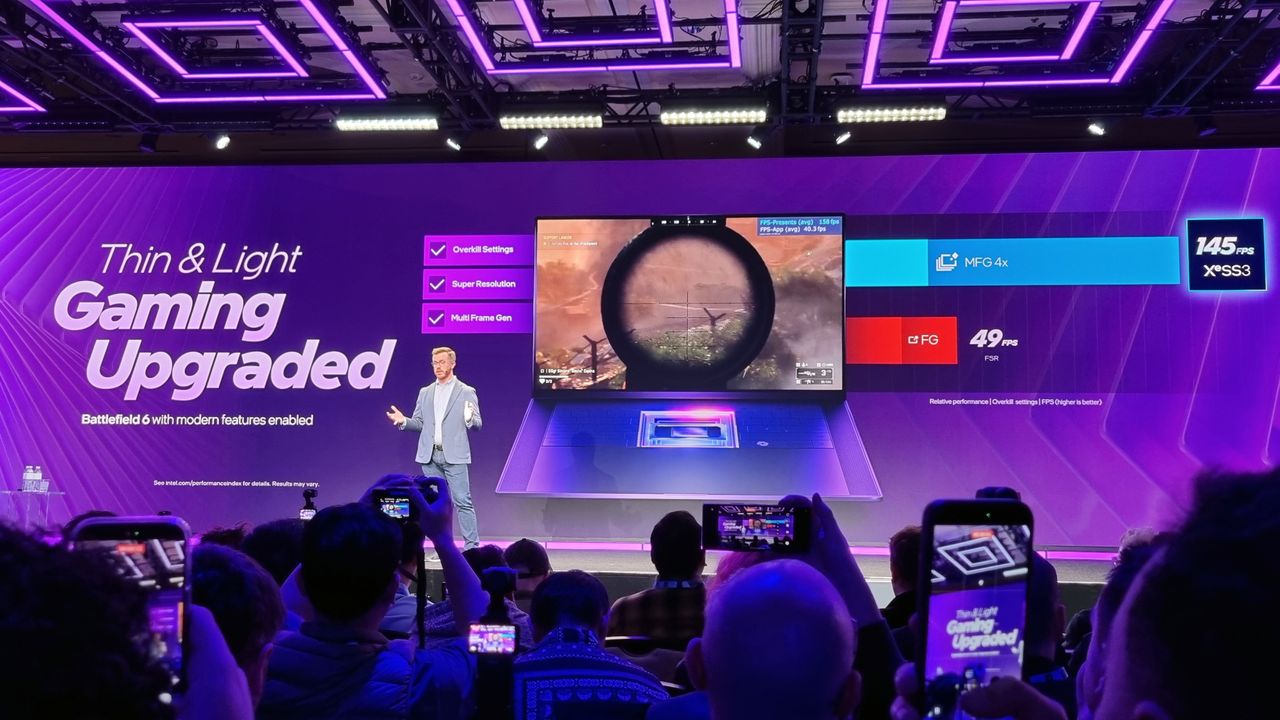
Traditionally, Intel's graphics drivers have been a mixed bag, something that Intel's Dan Rogers mentioned in this years CES 2026 Panther Lake launch:
"Graphics at Intel has had an interesting history," he began. "Ubiquitously deployed, with a massive install base—but previously, lacking in key features, driver support, and frankly, performance."
"We've re-architected our entire software stack and strategy to include extensive game day testing, day zero driver support, and a full, modern feature set."
"Last year alone, our engineering teams engaged 300 developers on pre-release titles, and supported 50 day zero driver releases. This is lightyears ahead of where we were just a few years ago."
Undoubtedly true, although at the end of 2024 (more than a year, I grant you), the Intel Arc B580 desktop GPU still gave my hardware overlord a whole heap of trouble when he came to test it, much of which was down to driver troubles. If Intel wants gamers to adopt its new Core Ultra Series 3 chips for primary gaming devices, the graphics drivers need to be rock solid—no matter how well they perform on paper—and it looks like it's well aware of this fact.
At a Q&A session after the launch, I got a chance to ask a group of Intel's finest how its graphics driver technology has improved, and what's changed behind the scenes to make driver support a priority.
Keep up to date with the most important stories and the best deals, as picked by the PC Gamer team.
"It's been a journey," said Damien Triolet, director of GPU technical marketing. "We've been working on that for a few years. A few things that we've done is try to unify some key layers within the software stack."
Source: PC Gamer