Intel's New Top-end Core Ultra Series 3 Mobile Chips Promise Up To
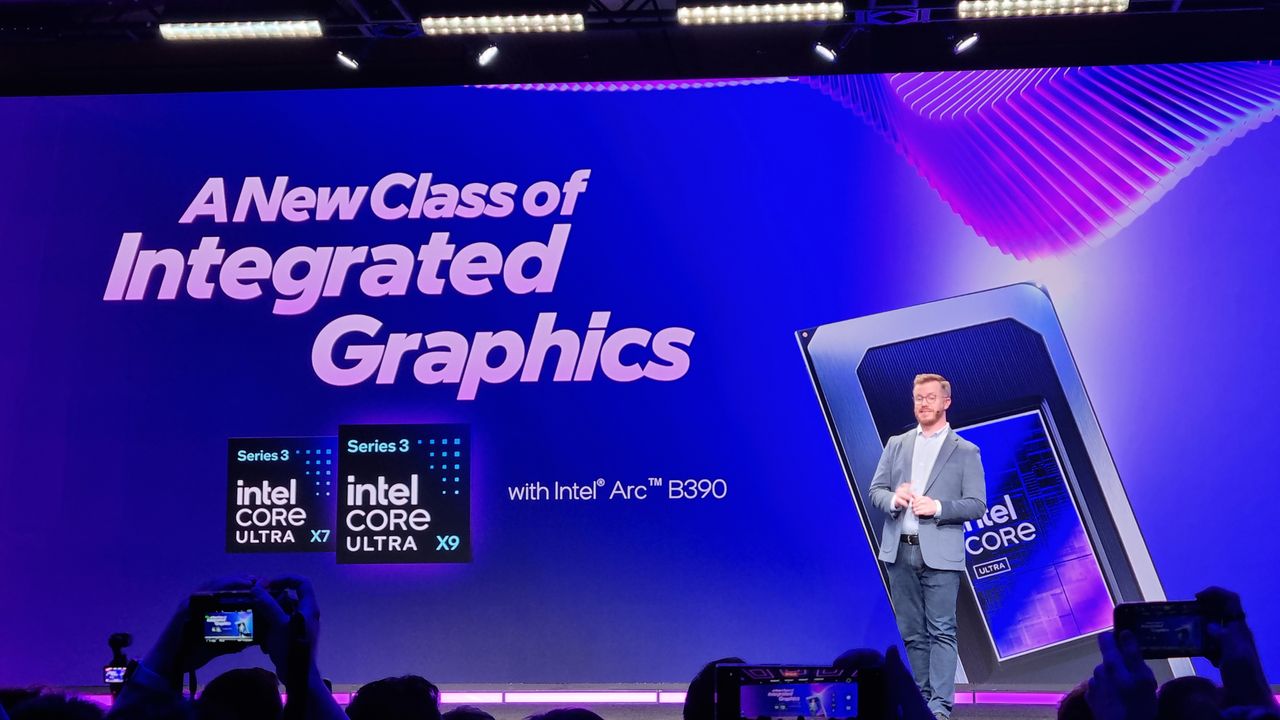
Intel has finally taken the last wraps off its Panther Lake-based Core Ultra Series 3 range of mobile chips, and it's making some pretty impressive claims about their performance. Before the expected AI NPU TOPS figures, Intel's VP of PC products, Dan Rogers, dedicated a fair chunk of the company's CES 2026 presentation to the gaming chops of the 18A-based silicon.
Ah, it's nice to have a win over the endless AI guff, isn't it? Anyway, headline news is that Intel is claiming up to a 77% integrated graphics performance boost over the previous Lunar Lake-based Intel Core Ultra 9 288V with the top end chips. That's a pretty bold statement, given how impressed we were with Lunar Lake's gaming performance overall.
Intel has also promised much improvement in its GPU driver stack, which, if true, could make these mobile beasties a force to be reckoned with for slim and light gaming machines.
Key to the claimed performance figures are the architectural changes under the silicon hood. Next to some newly-redesigned P and E-cores lies what Intel calls a "massive GPU" for the high end Core Ultra X7 and X9 chips, complete with built-in ray tracing support.
The iGPU in question is called the Intel Arc B390, a Battlemage-branded (sort of) integrated graphics cruncher making use of Intel's new Xe3 cores, and don't even get me started on the naming schemes. There's also the Intel Arc B370 iGPU to contend with, along with a fair few Core Ultra 9, 7, and 5 chips with lower Xe-cored "Intel Graphics" denominations, which I'll go through in detail below.
Intel hasn't confirmed the exact core split yet for each SKU yet, which means we only have a total core count for each chip, not a full P-core, E-core, and LPE-core breakdown. I'll update this article when that information is confirmed.
And, if you'd like more of a deep dive into Panther Lake, including the different chip tile designs and the RibbonFET nanoscale switches, along with the PowerVia backside power delivery that makes Intel's impressive battery life claims (up to 27 hours of Netflix streaming, up to 60% more performance at similar power levels to Lunar Lake) possible, I highly recommend you check out our Nick's Panther Lake architectural break down
Keep up to date with the most important stories and the best deals, as picked by the PC Gamer team.
In the meantime, though, we've got a whole host of Intel mobile chips to sort through. 14 of them, to be exact. Best get started then, hadn't we?
The big guns here
Source: PC Gamer