Internet As We Know It Emerged Out Of The Protocol Wars, Which Is...
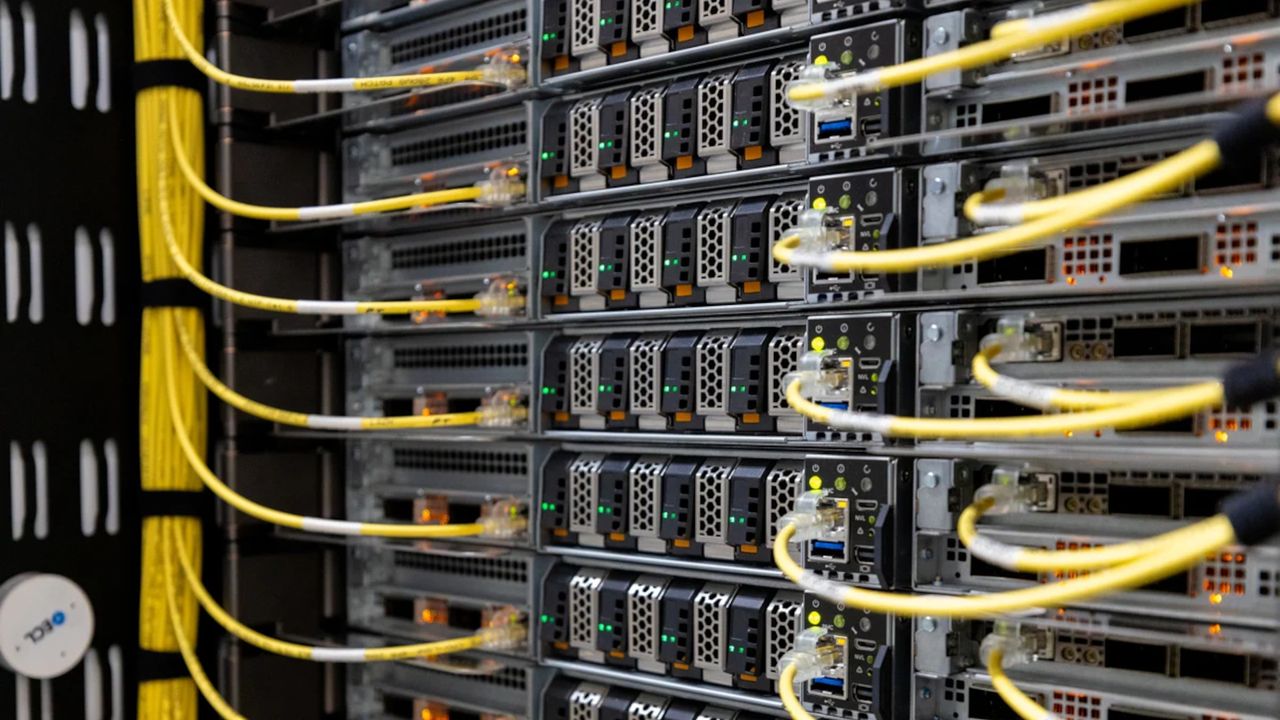
I often take the internet for granted. Over the years it's taken many forms but the underlying technology has mostly remained the same. However, even the very foundation of the internet as we know it was not always a given. To that end, I was recently told about the Protocol Wars of the 1970s, 80s, and 90s.
The Protocol Wars is mentioned in passing in Sir Tim Berners-Lee's new book This is for Everyone, and Sir Berners-Lee is often called the inventor of the World Wide Web, so I should probably take what he says seriously. Berners-Lee essentially married HTML (the visual webpage code we see every day) to the Transmission Control Protocol (TCP) and Domain Name System (DNS), which were already in operation.
The former of these two already-operative systems and protocols, TCP, is what was up for question prior to the late-80s/early-90s creation of the World Wide Web.
I knew TCP as a protocol existing alongside IP (Internet Protocol)—TCP/IP—with them together forming the group of protocols that underlie our internet today. These protocols are essentially sets of rules governing how systems communicate over networks and the internet, ie, explaining how data should be organised and transmitted. TCP deals with the virtual handshake between systems and data formatting (the host-to-host communications) and IP deals with delivering the packets of data (the inter-networking).
In networking, TCP/IP is often taught alongside the somewhat equivalent OSI model. Both can be conceptualised as different layers in a stack, with each layer performing a different function. The layers in each of the two stacks—one stack for TCP/IP, one for OSI—correspond to layers in the other, and while TCP/IP is what's used in practice, the OSI model is often used to help understand what's going on in network and internet transfers.
That's how it's usually taught in networking today: The OSI model is taught as another way of conceptualising what's going on in TCP/IP transfers.
So I was a little surprised to find that, actually, TCP/IP and OSI battled it out in the 70s and 80s, each vying to be the standard of choice for the internet. At least, that's the way my retrospective glasses gleam it, because no doubt at the time it wasn't seen as a march towards the internet as we know it today. That's hindsight.
Keep up to date with the most important stories and the best deals, as picked by the PC Gamer team.
Before TCP/IP and OSI battled it out, though, TCP/IP was battling other protocols.
Source: PC Gamer