Gaming: It's Been 14 Years Since I Played A 2d/3d Hybrid Puzzle Game As...
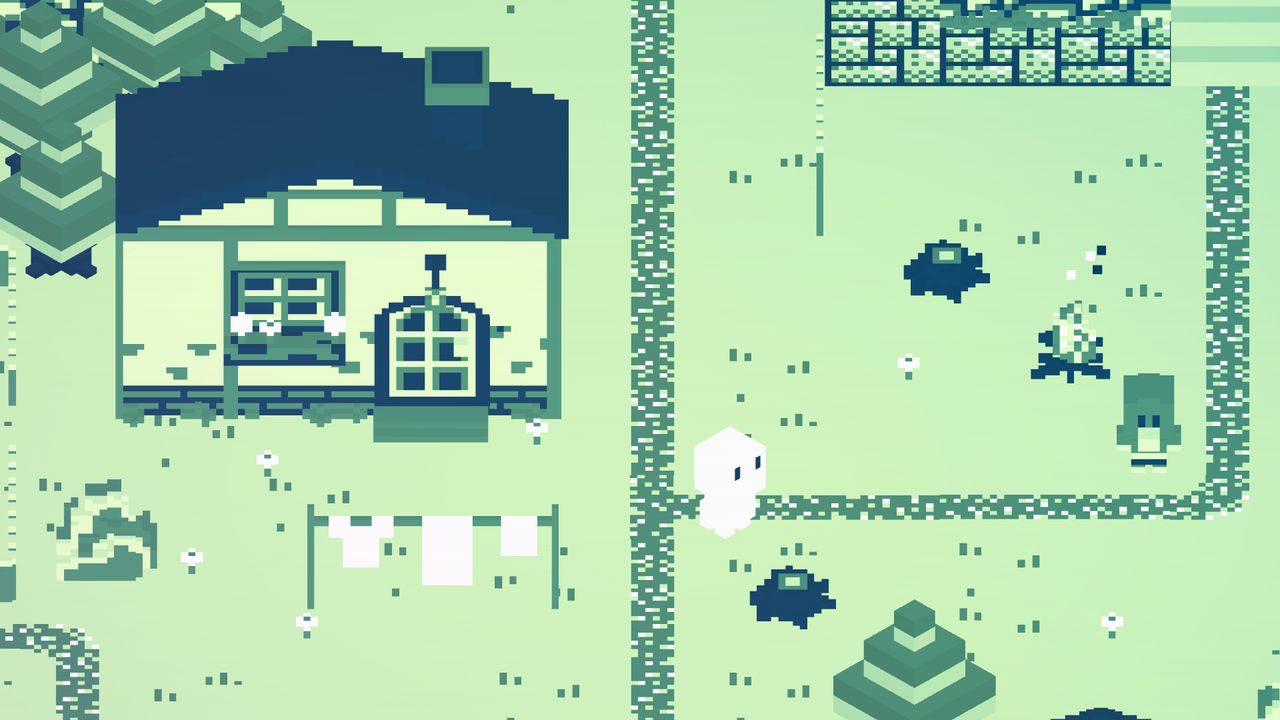
Zelda meets Fez in this little puzzle game where you can rotate the entire world.
I've spent the last 14 years surprised that more games haven't stolen the central gimmick to 2012's Fez. A 2D world that you can rotate like a 3D object to find hidden secrets is the kind of trick that never gets old. But the Fez-like era never really happened and I've been left to wonder what it might be like to play something even half as clever.
Cassette Boy is the closest I've ever got to playing a game that might actually rival Fez. While it lacks Tetris blocks and made-up languages, it's full of similarly mysterious characters and puzzles to uncover as you spin every level around in search of answers.
The moon is gone and you, a small boy made of white cubes, are on a mission to find it. Cassette Boy begins as a legally distinct Zelda clone—you pull a sword out of a stone in the first five minutes—and transforms into something else the moment you have the power to turn the world around as many times as you'd like.
Just like in Fez, the ability to peek behind solid objects, like houses and trees, in what you thought was a 2D world is an arcane power that only the strangest characters you meet seem to acknowledge. Everyone else is still living in knockoff Hyrule and has no idea a giant coin is floating behind the lighthouse. It's almost like you've enabled a cheat code to break the game in ways the developers didn't intend. Almost.
When I encountered my first puzzle, I knew very quickly that the developers intended for me to break my brain in order to figure out how to unlock a gate with a treasure chest sitting behind it. I thought Cassette Boy would go easy on me to start, but its optional shrine rooms feel like final exams I had no time to study for. You enter these rooms and are given no instructions, but that's precisely what makes them so satisfying to solve. Driven by pure intuition, I figured out how to use a crate to climb up onto the walls and shoot an arrow at a switch that was unreachable otherwise. I was then able to take that basic concept and identify where to apply it elsewhere in the game, like when I was helping an old man who locked himself out of his room.
Once you make it past the intro, Cassette Boy opens way up. I'd enter a room with three exits and find myself going down long rabbit holes before ever returning to see where the other paths led. A long hallway with skeleton archers turned out to be its own puzzle as I spun it around and around
Source: PC Gamer