Latest Msi Forge Gk600 Tkl Wireless Review
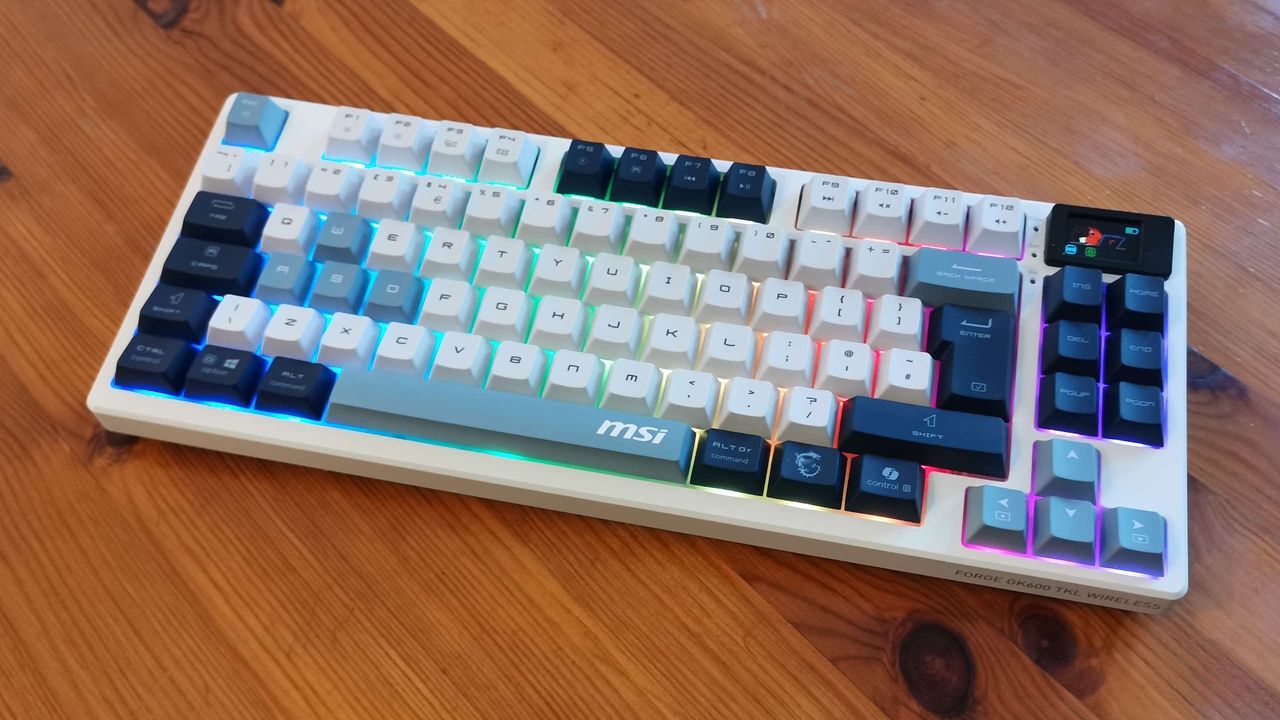
The Forge GK600 TKL offers wireless capability, hot-swappable key switches, and a comfortable practical keyboard layout and profile, all for under $100. While you can get more high tech but super specialised keyboards for less, it's hard to find a wireless all-rounder of this size at the cheaper end of the spectrum. If you can overlook the opaque keycaps, connectivity switch positioning, and shortish battery life you're still getting a gorgeous keyboard for an acceptable price.
PC Gamer's got your back
Our experienced team dedicates many hours to every review, to really get to the heart of what matters most to you. Find out more about how we evaluate games and hardware.
The MSI Forge GK600 is a tenkeyless (TKL) gaming keyboard, meaning it's missing the numberpad. But Katie, I hear you say, if a normal keyboard has all the keys you could ever want, what's the point getting rid of them in favour of a TKL board? Well, friend, it's all about real estate and maneuverability. And cash, of course. But isn't everything? Say you've spent all your cash on the best gaming PC and you're now stuck with a teeny tiny desk. A TKL board nets you more desk space so you can stack plates and coffee cups beside it to your heart's content, or whatever else you're draping over your battlestation.
With the MSI Forge GK600, you're killing two birds with one stone: saving space on your desk while also protecting your dragon's hoard of gold. Let's get into what makes the Forge GK600 special and, of course, what doesn't.
Sitting somewhere in the region of a 75-80% layout, the Forge GK600 takes up less space without sacrificing as much productivity as the super compact layout of something like the 60% NuPhy Air60 HE. Its dedicated navigation and direction keys aren't being swallowed up by the mass of other keys, so you don't need to fumble around for them, while the two-column layout of the navigation section keeps it from extending into your valuable mousepad space. There's no programmable macro keys, but you still get use of 12 F-keys at the top.
I'm not a huge fan of the Delete key being dead center of the left column as a person who spends most of their time re-hashing walls of text. It initially left many a paragraph lost to an erroneous page-up/insert keystroke, but didn't take long to get used to the odd positioning.
Size: TenkeylessSwitches: Mechanical linear, hot-swappable (5 pin)Key caps: Dye-sublimated PBTBacklighting: Per keyAnti-ghosting: N-key rolloverPolling r
Source: PC Gamer