Life And Death Of Call Of Duty's Most Controversial Mechanic, The...
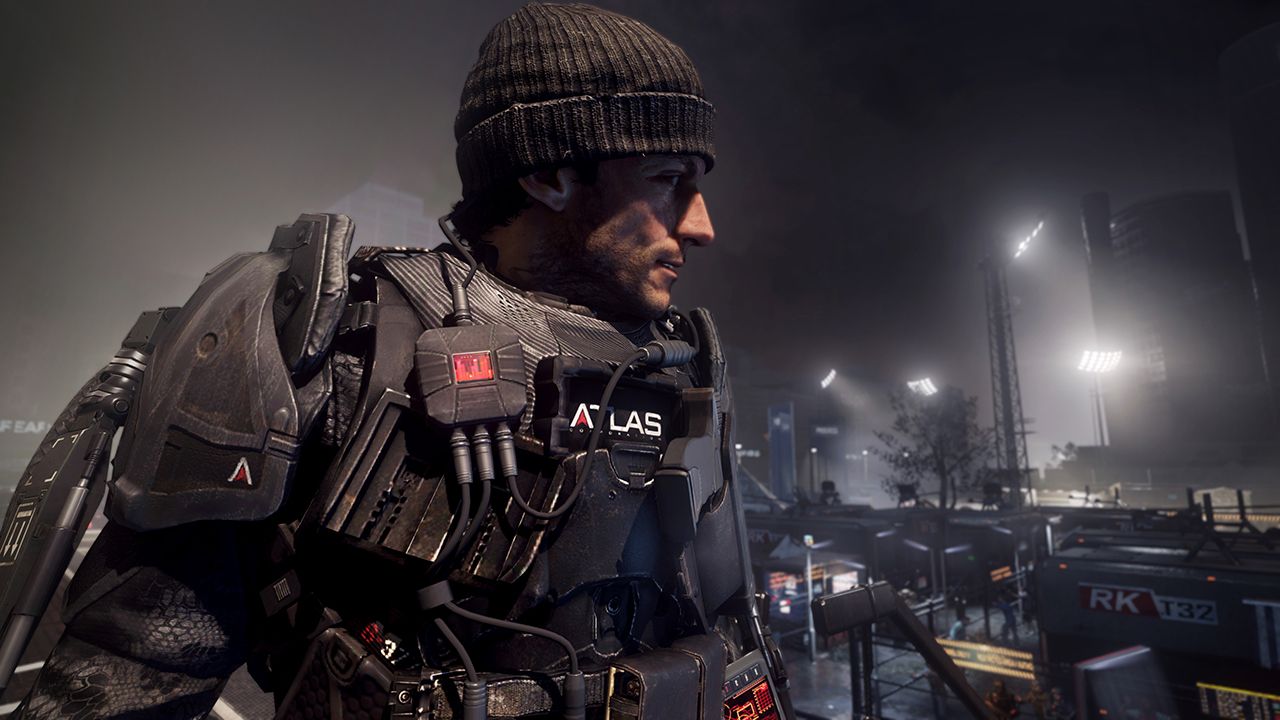
How CoD embraced the future, before backlash brought it back down to earth.
"When I first showed them the boost jump, are you kidding me? They almost threw me out of the room." Former Call of Duty director Glen Schofield is recalling the day he pitched Advanced Warfare's signature mechanic to Activision.
As the series entered its second decade, it had already begun to veer away from historical drama and behind-the-headlines espionage. Treyarch was developing drone swarms for Black Ops 2, and Infinity Ward had dared to kick off the singleplayer campaign of Call of Duty: Ghosts in space.
What Schofield was proposing, though, was something different: a futuristic moveset that would interfere with the fundamentals of CoD's sacred multiplayer component. Rather than merely providing novelty in the campaign, the boost jump would change the rules of competitive deathmatch, enabling players to reach high rooftops in newly vertiginous maps, and gain an edge through skilful combination of double jumps and mid-air dashes.
If the idea backfired—drawing ire from a community which had grown used to its annualised fix of familiar FPS action—then Activision would be facing a serious threat to its most reliable cash cow.
Nonetheless, Advanced Warfare's concept was greenlit. Schofield's studio, Sledgehammer, had proven itself by saving Modern Warfare 3 after many of that project's original developers had walked out to work on Titanfall. It had earned some goodwill. But Schofield didn't take that trust for granted.
"We started to work on the game," he says. "We knew that it had been approved, but they weren't happy with the boost jump idea. So we put it in one of our older levels." In the earliest prototypes, Advanced Warfare's movement included wall jumps, something that ultimately wouldn't arrive in the series until later iterations.
"It took a lot of time to make it fun to jump, and now you gotta work on shooting," Schofield says. "It was like building a brand new game from scratch, because you have a main character that now jumps. You have to do shooting in every single direction. So it was a big, big project."
Keep up to date with the most important stories and the best deals, as picked by the PC Gamer team.
Development was complicated by the fact that Activision's higher-ups, back in the early 2010s, didn't know what an exoskeleton was. The entire concept of the boost jump depended on the idea that future soldiers could leap around with greater power and agilit
Source: PC Gamer