Magic: The Gathering's Original Art Director Says One Of Its Most...
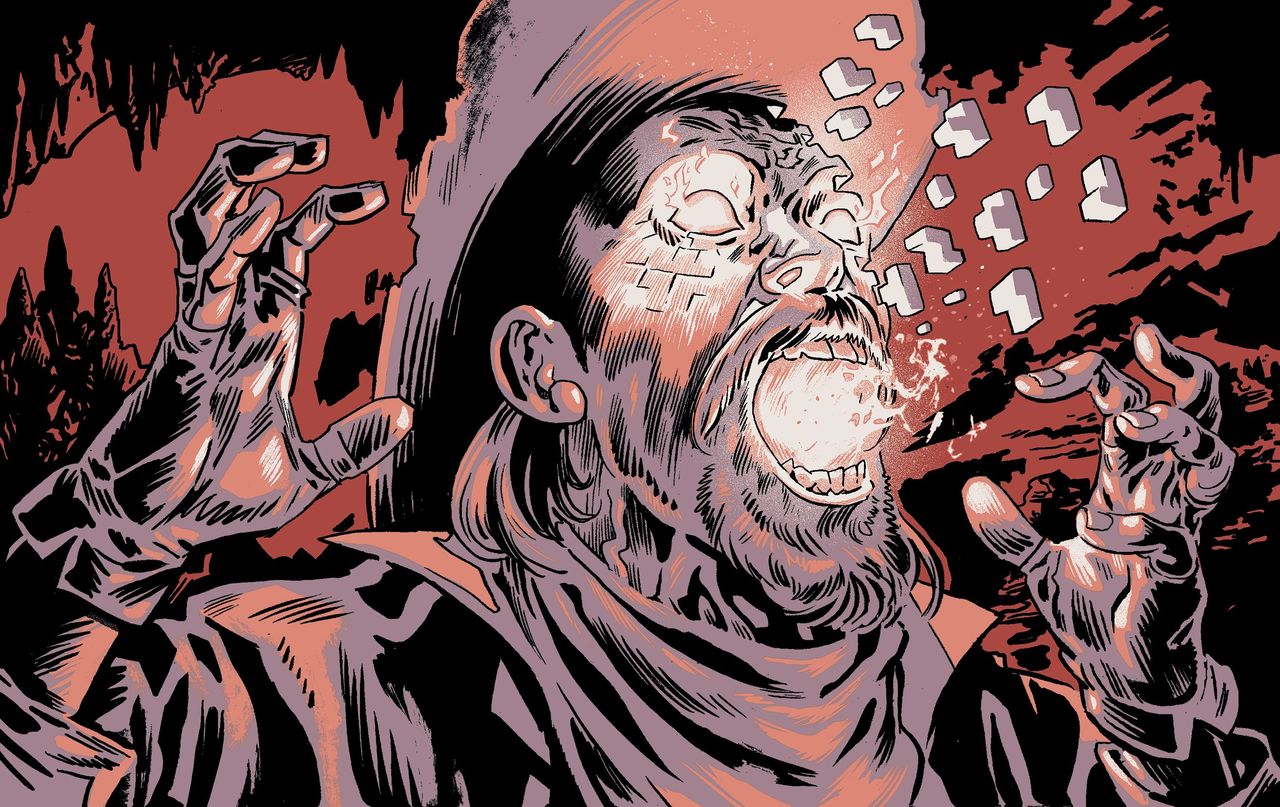
Back in August 1994, not long after Doom had pulled PC gaming blinking into the spotlight, Magic: The Gathering released a small expansion named The Dark. Comprising just 119 cards, the set was unique for how it upended the traditional depiction of Magic's mana colours. Most notably, it radically reinterpreted White mana cards—normally presented as angelic and peaceful—with scenes of religious fanaticism and violence.
It has long been believed that the cards' designs were influenced by the Satanic Panic, which Magic itself was caught up in after its release in 1993. But only recently has this been confirmed. Just before Halloween, Magic's original art director Jesper Myrfors took to Facebook and laid out the design philosophy behind the cards, writing "The Magic: The Gathering release The Dark was 100% a commentary on the evils and hypocrisy of bigoted right wing Christians.
"Having gone through the idiotic satanic panic of the '80s and then listening to their moronic and unfounded pearl clutching arguments that MTG promoted 'devil worship' I had had enough and decided to hold up a mirror to them," Myrfors continued. This, he says, is why White is "represented as dangerous, dogmatic and unempathetic in the set," adding that "White in The Dark glorifies ignorance, mob mentality and violence against those who are different."
Myrfors provided further context in an interview with Polygon, discussing the direct influence the Satanic Panic had on him as a teenager and an avid Dungeon & Dragons fan. "When I was about 15, my friends' parents told me I couldn't hang out with them anymore because they thought I was into Satanism," he recalled. "At that age, that really hurts. You're too young to defend yourself."
The most direct influence on The Dark, Myrfors explains, was Stephen Dollins, a former pro-wrestler and self-proclaimed "prophet" who has accused everything from Pokemon Cards to the Tooth Fairy as being linked to Satanism. One of Dollins' earliest targets was Magic, where he suggested that the Mana circle on the reverse of Magic's cards was evidence of hidden pentagrams. "He pointed to the mana circle on the back and what 'they' did," Myrfors explains, with 'they' referring to Magic's purportedly devil-worshipping design team. "But for the record, there is no 'they'. I was 100% in charge of the look and feel of that game."
As time passed, all of this "bubbled up" in Myrfors, until he eventually decided to "poke back" at the religious right. And an opp
Source: PC Gamer