Gaming: Memory Chip Specialist Sk Hynix Reports Record-breaking Profits But...
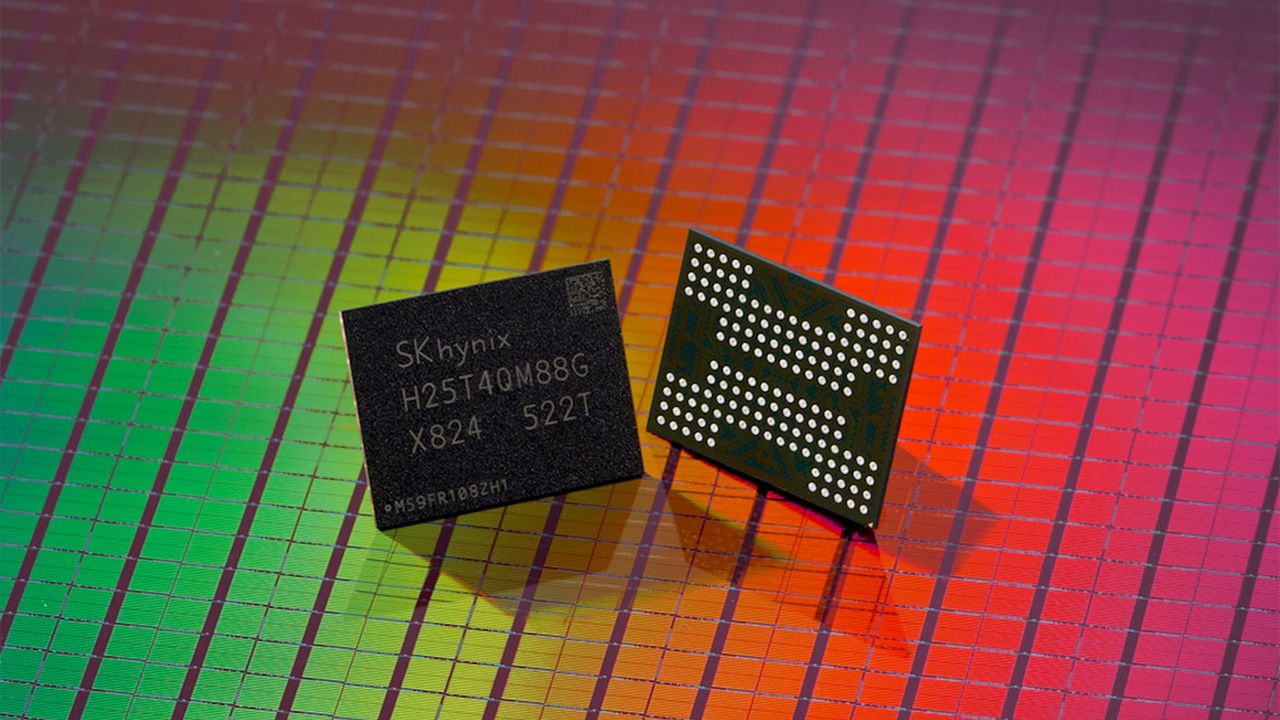
2025 was a bumper year for Korean memory specialist SK Hynix. In fact, the latest financial results show it was the company's best year ever. Do I even have to explain why? OK, it's AI, of course.
But first, the bald numbers. SK Hynix raked in 97 trillion KRW in revenues in 2025. That's about $67 billion dollars in old money. Profits, meanwhile, hit $33 billion, giving the company stellar operating margins of 49%.
Compared to 2024, revenues climbed by 47%. However, profits slightly more than doubled. Long story short, SK Hynix didn't just sell more stuff. It made more money on every sale.
This does not exactly come as a surprise. The prices of pretty much all memory-related products have been spiralling upwards of late. But the cost of producing memory products has surely not increased as much. The result, pretty obviously from SK Hynix's published results, is that a lot more money is being made on each memory chip.
So, apart from the obvious upside for SK Hynix's shareholders, is there any good news here? The company did talk about the investments it is making in production capacity.
"Having successfully completed the preparation stages to mass produce HBM4 – for the first time in the industry – in September last year, the large-scale production of the next-generation HBM has been underway to meet customer requests," SK Hynix said.
Of course, HBM is really only relevant for servers and AI farms, so what about regular old DRAM as used in PCs? "For conventional DRAM, SK Hynix intends to accelerate the transition to the 1 cnm process [that's essentially a 10nm class node], expanding its AI memory product portfolio to include solutions like SOCAMM2 and GDDR7," it said.
Keep up to date with the most important stories and the best deals, as picked by the PC Gamer team.
Again, that's mostly an AI and enterprise message, albeit Nvidia uses GDDR7 for gaming graphics cards.
As for NAND flash memory for SSD, SK Hynix says it, "plans to maximize product competitiveness by transitioning to 321-layer technology, while actively addressing AI data center storage demand by leveraging Solidigm’s QLC eSSD."
Source: PC Gamer