New If AI Replaces Workers, Should It Also Pay Taxes? 2025
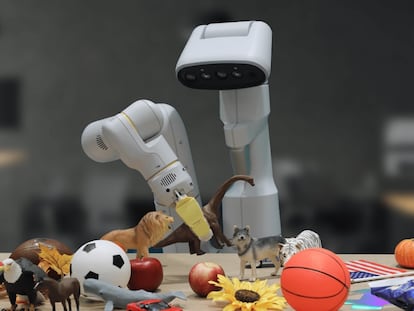
The technological race among industry giants and the wave of layoffs they have announced has revived the debate about the advisability of taxing automation
It can’t be seen or touched, but it’s shaking up markets and attracting investment. Artificial intelligence (AI) has become the object of desire for Big Tech, which is pouring astronomical sums into its development, fueled by record profits. The other side of this frenzy is workforce reductions, with automation as the backdrop, announced by multinationals like Amazon, Meta, and UPS, which, incidentally, threaten to extend the impact of new technologies to another area: public coffers. Fewer people working means fewer taxpayers, so the question naturally arises: if machines and algorithms replace humans in their jobs, should they also have to cover the taxes that humans stop paying?
Labor, through income tax and social security contributions, is one of the pillars of the tax systems of almost all countries, and the impact of automation on the tax base — or, in other words, the potential decrease in revenue — is not a new concern. In 2019, Nobel laureate Edmund Phelps proposed a tax on robots to help maintain social benefits. Shortly before, Bill Gates, founder of one of the world’s largest technology companies, Microsoft, which has its own artificial intelligence (Copilot), had suggested applying the same tax burden to robots as would be borne by the workers they replace.
“The trend toward automation and AI could lead to a decrease in tax revenues. In the United States, for example, about 85% of federal tax revenue comes from labor income,” says Sanjay Patnaik, director of the Center for Regulation and Markets at the Brookings Institution. He suggests that governments address “the risks posed by AI” by increasing capital gains taxation rather than creating a specific tax on it, due to the difficulties in designing such a tax and the distortions it could generate. The repeated use of the conditional tense is because the impact of generative AI, the kind capable of creating content on demand, is still uncertain, both in positive terms — improved productivity and economic growth — and negative terms; job losses.
Even so, forecasts are mixed. Goldman Sachs, for example, estimates that AI will boost global GDP by 7% over the next decade; the IMF predicts it will contribute up to eight-tenths of a percentage point annually to growth between now and 2030. On the other hand, the International Labour Organiza
Source: HackerNews
