New Rise Of Industrial Software 2025
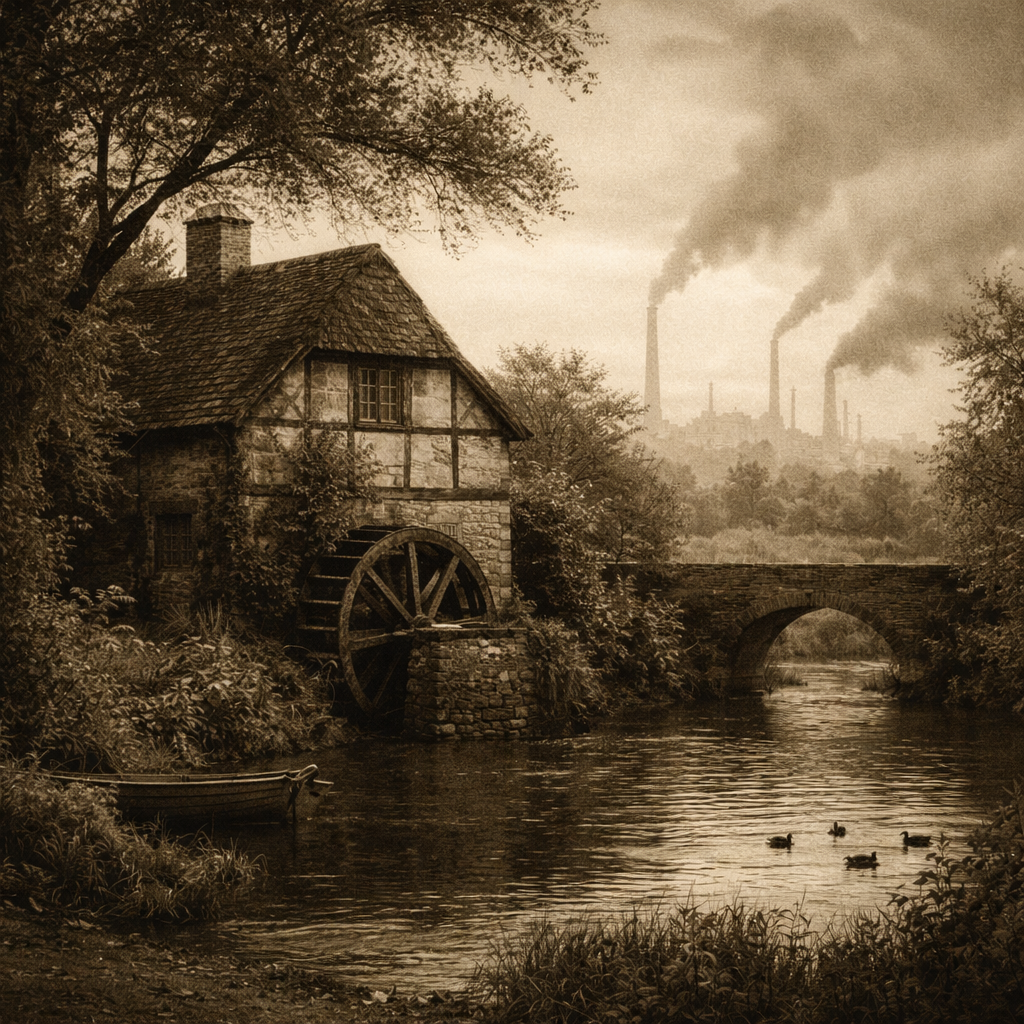
Of or relating to productive work, trade, or manufacture, esp. mechanical industry or large-scale manufacturing; ( also) resulting from such industry.
For most of its history, software has been closer to craft than manufacture: costly, slow, and dominated by the need for skills and experience. AI coding is changing that, by making available paths of production which are cheaper, faster, and increasingly disconnected from the expertise of humans.
I have written previously about how AI coding can be a trap for today’s practitioners, offering shortcuts to incomplete solutions at the expense of the understanding needed for sustainable development practices. But as we collectively address the shortcomings of our current toolset, it is clear that we are heading into a world in which the production of software is becoming increasingly automated.
What happens to software when its production undergoes an industrial revolution?
Traditionally, software has been expensive to produce, with expense driven largely by the labour costs of a highly skilled and specialised workforce. This workforce has also constituted a bottleneck for the possible scale of production, making software a valuable commodity to produce effectively.
Industrialisation of production, in any field, seeks to address both of these limitations at once, by using automation of processes to reduce the reliance on human labour, both lowering costs and also allowing greater scale and elasticity of production. Such changes relegate the human role to oversight, quality control, and optimisation of the industrial process.
The first order effect of this change is a disruption in the supply chain of high quality, working products. Labour is disintermediated, barriers to entry are lowered, competition rises, and rate of change accelerates. All of these effects are starting to be in evidence today, with the traditional software industry grappling with the ramifications.
A second order effect of such industrialisation is to enable additional ways to produce low quality, low cost products at high scale. Examples from other fields include:
In the case of software, the industrialisation of production is giving rise to a new class of software artefact, which we might term disposable software: software created with no durable expectation of ownership, maintenance, or long-term understanding.
Advocates might refer to this as vibe-coded software, and sceptics will invariably talk about AI slop. Regardless of its
Source: HackerNews
