Gaming: Not Content With Utter GPU Domination, Nvidia's New Vera Chip Is...
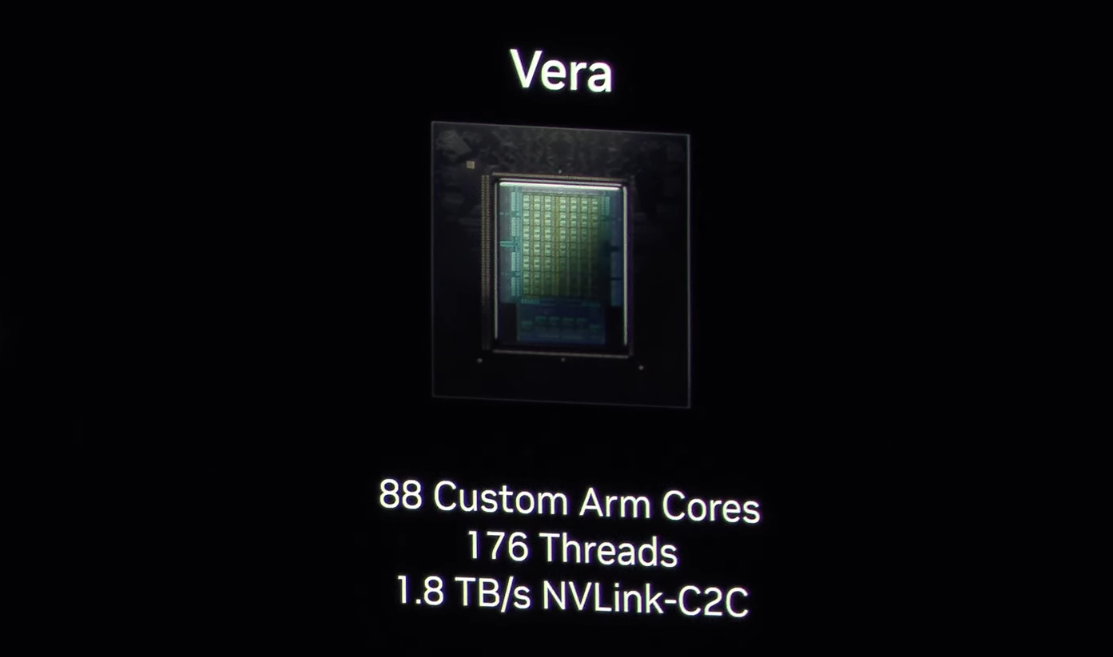
Nvidia announces first customer for its custom-designed Vera CPU.
Nvidia utterly dominates the market for GPUs, be that AI chips or gaming graphics cards. But this, apparently, is not enough. Now, Nvidia is gunning for the CPU market, too.
Nvidia previously announced a new Arm processor called Vera and based on custom-designed CPU cores. Now the company has announced an initial customer for the chip and emphasised that it is the first time it has supplied a CPU as a separate product.
Bloomberg reports on a new deal between Nvidia and cloud services outfit CoreWeave that forms the basis of what is effectively the launch of the Vera CPU. In what has become a typically circular form for the AI industry of late, Nvidia is investing $2 billion in Coreweave, while the latter will buy up to $6 billion in Nvidia hardware, including those Vera chips.
Bloomberg says the Vera CPU will be competing with server chips from Intel and AMD, along with other cloud computing processors such as Amazon's Graviton. But not all that much is known about Nvidia's Vera CPU.
Nvidia has previously said that it runs a new custom-designed Arm core called Olympus. Beyond that, data points are limited to the fact that Vera has 88 cores, is rated at 50 W and offers double the performance of Nvidia's previous Arm CPU, known as Grace.
So, inferences can be drawn from that. Grace has 72 cores, so Vera is getting double the performance with a relatively small increase in core count from 72 to 88. 50 W is also a remarkably low power rating for an 88-core CPU.
For the record, Grace uses CPU core architecture licensed directly from Arm, the Neoverse V2 CPU core design. In other words, Nvidia did not design the cores in the Grace CPU.
Keep up to date with the most important stories and the best deals, as picked by the PC Gamer team.
Of course, for us the big question which remains unanswered is whether the new Vera CPU and its Nvidia-designed cores are destined to break free from data centers and appear in PCs.
Source: PC Gamer