Nvidia's Promising '4k 240 Hz Path Traced Gaming' With Dlss 4.5 But... (2026)
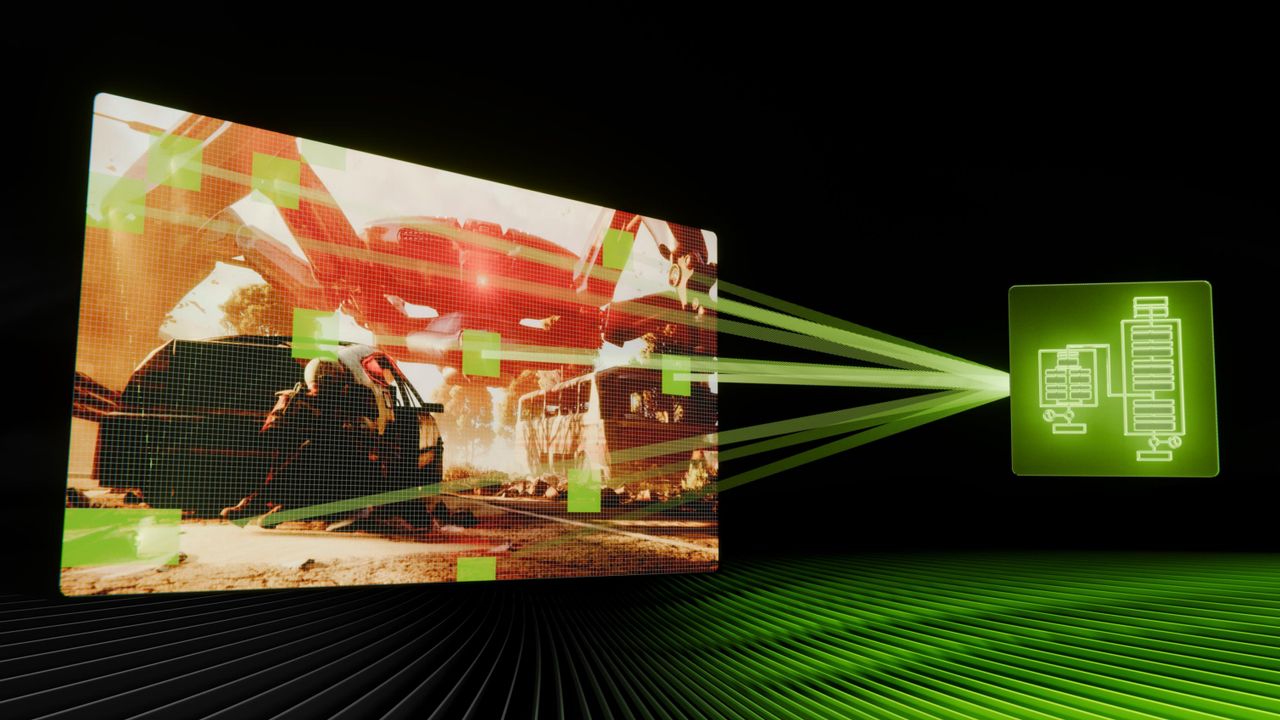
It's convinced the 2nd gen Transformer model is good enough that you will.
Nvidia's new DLSS 4.5 announcement comes with the promise of 4K 240 Hz path-traced gameplay, and you know there's only one way we're going to get there right now: AI. With a combination of a second generation transformer model and an expanded Multi Frame Generation feature offering up to 6x frame gen, the green team reckons it can deliver "incredible 240 Hz+ smoothness" in some of the most graphically intensive games around.
MFG (or Multi Frame Generation if you're not into the whole brevity thing) was introduced at CES last year as one of the fancy new features of the RTX Blackwell GPU generation. It follows the now-familiar pattern of the original DLSS Frame Generation style of using a mixture of frame interpolation, optical flow calculations, and AI image generation to smooth out your gameplay.
Except with MFG on RTX Blackwell chips you're adding in up to three completely generated frames in between each actually rendered one, and now using a new optical flow AI model instead of dedicated accelerator hardware with an enhanced display engine to help frame pacing.
The headline-grabbing update for the RTX Blackwell architecture at CES this year, however, is that Nvidia is convinced it can slip up to five extra frames between each rendered frame to give you 4K gaming at 240 Hz even with path-traced games.
Whether it can convince you will be the key, however, because that's a bold claim, and I can already feel many a gamer bristling at the thought of upping the ante of frame generation to such an extent. Even as someone who enjoys frame gen on a beefy enough GPU, I will admit my credulity is feeling as stretched as yours right now. But Nvidia's banking on the new transformer model powering the DLSS 4.5 Super Resolution upscaler to help fix the visual artifacts associated with frame generation.
We're promised better temporal stability, reduced ghosting, and smoother edges with DLSS 4.5 thanks to a mix of that second-gen transformer model as well as improved training for the model itself. At last year's RTX Blackwell CES event Nvidia's VP of applied deep learning research, Brian Catanzaro noted that it has a supercomputer "with many 1000s of our latest and greatest GPUs, that is running 24/7, 365 days a year improving DLSS." And Nvidia's had another 12 months making that training dataset even bigger and has made it even better at analysing just where its upscaler is going wrong.
Source: PC Gamer