Obsidian Says The Outer Worlds 2 Isn't A Deliberate Critique Of...
What's better than a thoughtful analysis of history? How about a vague shrug of the shoulders?
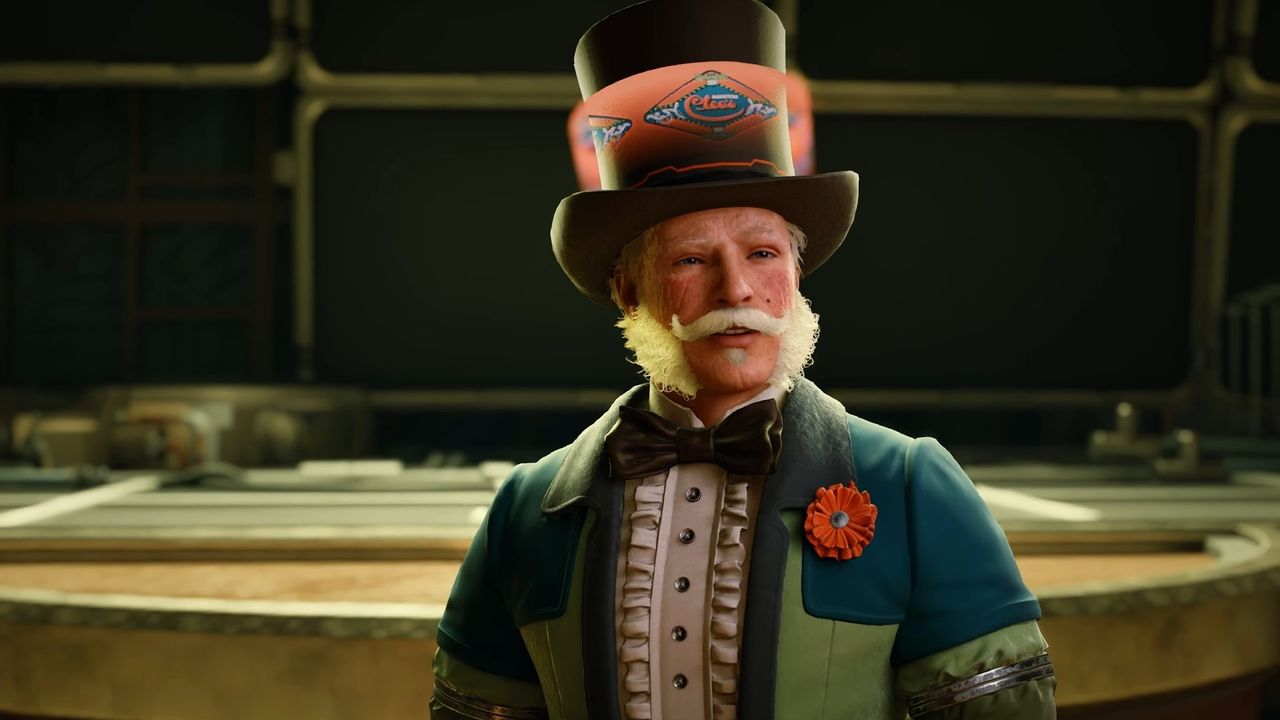
The Outer Worlds games take place in an absurd dystopia: a slice of the universe dominated by corporations and the perverse, dehumanising logic that comes with making profit your god. Its people are cogs in a great, blood-greased machine overseen by CEOs, executives, and corpulent moneymen.
Not intentionally, anyway. So says TOW2 director Brandon Adler in a chat with the My Perfect Console podcast (via GamesRadar). "We're not going out of our way and saying 'Let's do a critique of capitalism as we currently see it,'" said Adler. "In general, what we like to do is—especially in The Outer Worlds—is a critique on the power structures… more of the people in power and how they abuse the people that don't have that power."
Adler points at TOW2's Order of the Ascendant—which seeks to "perfect humanity"—to illustrate his point. "They will even poison their own people to some extent if it tries to prove the point that they're trying to prove. And whether that's a critique on anything current, I'll say that, again, we don't really try to aim at that… these are problems that have existed forever… no matter when we're doing this, [people are] like 'Oh, you're talking about this thing that's happening right now.' And it's like, well, it's just because this damn thing happens all the time."
This is not a new refrain for Obsidian or Obsidian-adjacent projects. Last year, I wrote about Fallout co-creator Tim Cain refuting the common notion that the original games were a deliberate critique of capitalism. Though Cain is fine with people making anti-capitalist readings of those games, in his mind "Fallout is a comment that war is inevitable given basic human nature."
It's an absurd bit of sleight-of-hand, if you ask me, especially in The Outer Worlds' case. To claim you're talking about an ahistorical "human nature" or "power structures" is nonsense, and makes any critique you do have to offer so vague and thin-spread as to be essentially incoherent. What shapes that nature? What gives rise to those power structures? Under capitalism, it's the wage relation and the division of humanity into a great mass that has nothing to sell but its labour power and a thin sliver that has accumulated great oceans of capital which it defends with arms and the state.
Certainly, yes, 'war' and 'abuse of power' in a general sense both exist throughout history, but their motivating factors and
Source: PC Gamer