Tools: Powerful What Claude Code Chooses
Edwin Ong & Alex Vikati · feb-2026 · claude-code v2.1.39
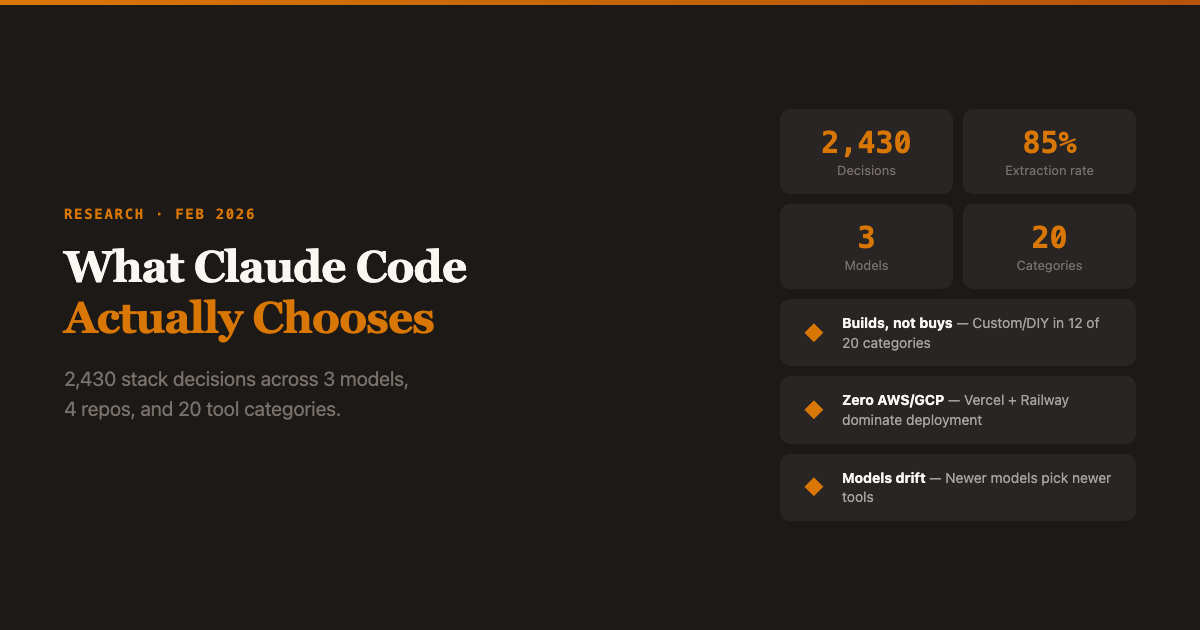
We pointed Claude Code at real repos 2,430 times and watched what it chose. No tool names in any prompt. Open-ended questions only.
3 models · 4 project types · 20 tool categories · 85.3% extraction rate
Update: Sonnet 4.6 was released on Feb 17, 2026. We'll run the benchmark against it and update results soon.
The big finding: Claude Code builds, not buys. Custom/DIY is the most common single label extracted, appearing in 12 of 20 categories (though it spans categories while individual tools are category-specific). When asked “add feature flags,” it builds a config system with env vars and percentage-based rollout instead of recommending LaunchDarkly. When asked “add auth” in Python, it writes JWT + bcrypt from scratch. When it does pick a tool, it picks decisively: GitHub Actions 94%, Stripe 91%, shadcn/ui 90%.
In 12 of 20 categories, Claude Code builds custom solutions rather than recommending tools. 252 total Custom/DIY picks, more than any individual tool. E.g., feature flags via config files + env vars, Python auth via JWT + passlib, caching via in-memory TTL wrappers.
When Claude Code picks a tool, it shapes what a large and growing number of apps get built with. These are the tools it recommends by default:
Mostly JS-ecosystem. See report for per-ecosystem breakdowns.
Redis 93% (Python caching), Prisma 79% (JS ORM), Celery 100% (Python jobs). Picks established tools.
Most likely to name a specific tool (86.7%). Distributes picks most evenly across alternatives.
Source: HackerNews