Reverse Engineering Us Airline's Pnr System And Accessing All...
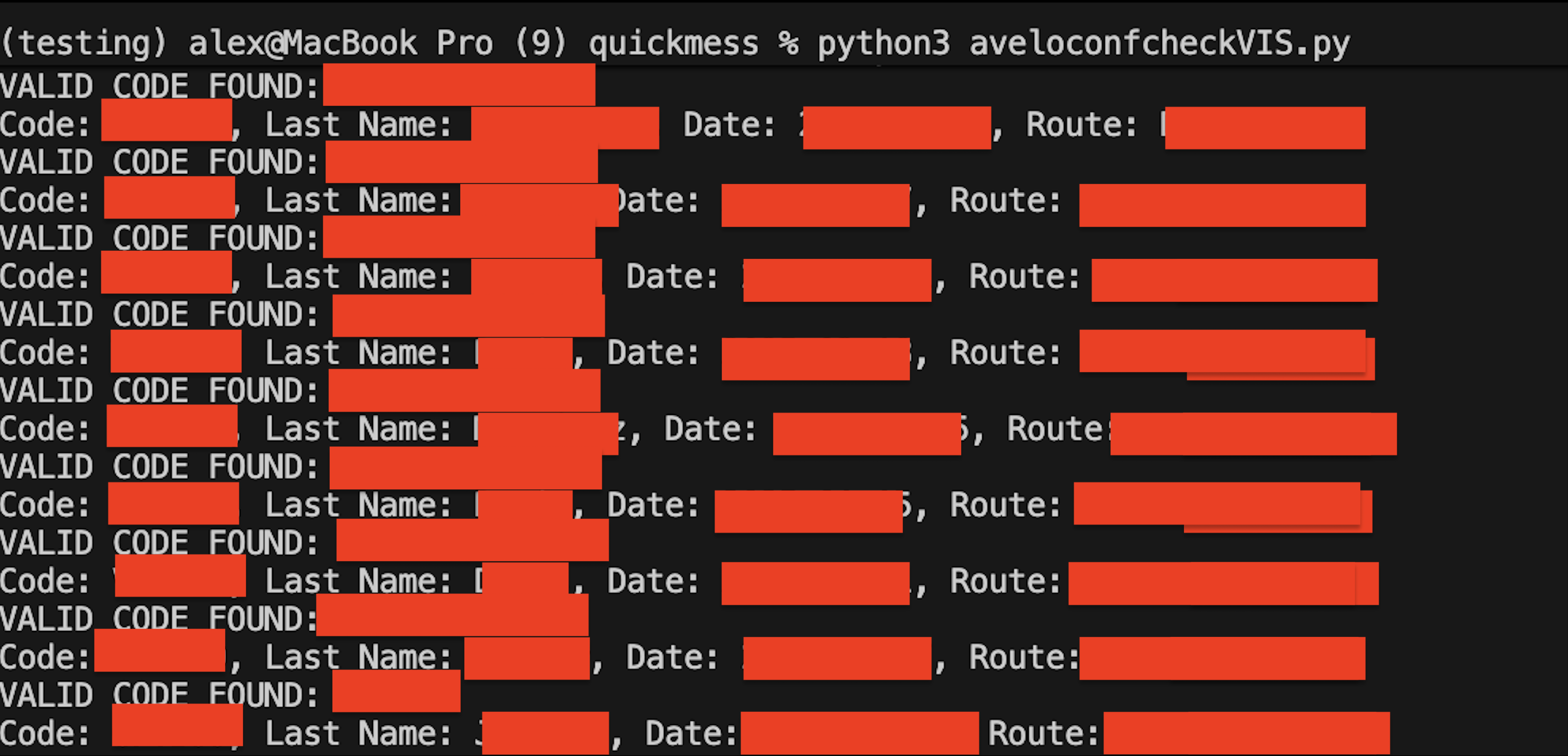
Initial Contact: Upon discovering this vulnerability on October 15, 2025, I immediately reached out to security contacts at Avelo Airlines via email.
October 16, 2025: The Avelo cybersecurity team responded quickly and professionally. We had productive email exchanges where I detailed the vulnerability, including the lack of last name verification and rate limiting on reservation endpoints.
November 13, 2025: Avelo pushed a fix to production and notified me that the vulnerabilities were patched. I independently verified the fixes were in place before publication, and informed the Avelo team of my intention to write a technical blog post about this vulnerability, highlighting their cooperative and responsive approach to security disclosure.
The Avelo team was responsive, professional, and took the findings seriously throughout the disclosure process. They acknowledged the severity, worked quickly to remediate the issues, and maintained clear communication. This is a model example of how organizations should handle security disclosures.
After my 9 AM Akkadian class, I sat down to change my flight out of New Haven with Avelo Airlines, and noticed that my computer was making some unusual requests. After digging a little further, I stepped into a landmine of customer information exposure. In the wrong hands, this critical vulnerability could allow an attacker to access full reservation details, including PII, government ID numbers, and partial payment info, for every Avelo passenger, past and present.
Before I walk you through my work on that Tuesday morning, let’s establish how airlines generally manage their reservations.
Normally, to access a flight reservation (which often contains sensitive information like passport numbers, Known Traveler Numbers, and partial credit card data), you need at least two pieces of information: a confirmation code and the passenger’s last name.
This two-factor system is generally secure. The space of all 6-character alphanumeric confirmation codes combined with all possible last names is astronomically large, making it impossible to “guess” a valid pair.
Suddenly, the problem becomes much simpler. The entire keyspace an attacker needs to guess is just the confirmation code. In Avelo’s case, their codes are 6-character alphanumeric strings ([A-Z0-9]).
That’s a big number, but it’s not “astronomically large.” It’s well within the reach of a modern brute-force attack.
Source: HackerNews
