Senate Passes Minibus Bill Funding Nasa, Rejecting Trump's Proposed...
After a tumultuous 2025 that saw it lose around 4,000 employees, NASA finally has an operating budget for 2026, and one that largely preserves its scientific capabilities. On Thursday, the Senate passed an appropriations bill funding NASA, alongside the National Science Foundation and a handful of other federal agencies.
Going into the appropriations process, the president called for a 24 percent year over year reduction to NASA's total operating budget. As part of that plan, the White House wanted to reduce the Science Mission Directorate's funding by nearly half, a move that would have forced NASA to cancel 55 ongoing and planned missions, including efforts like OSIRIS-APEX. The bill effectively rejects President Trump's plan, reducing NASA's total operating budget by just 1.6 percent year over year to $24.4 billion.
Per the new appropriations, NASA's science budget will stand at $7.25 billion, 1.1 percent less relative to fiscal 2024, while shuffling the remaining funds to focus on different priorities. For instance, the House and Senate allocated $874 million (+8.7 percent) for the agency's heliophysics work; planetary sciences, which oversees missions like New Horizons, was cut to $2.5 billion (-6.5 percent) compared to 2024. At the same time, NASA's STEM engagement office, which the president proposed eliminating, escaped unscathed with its funding maintained at parity.
"It's almost everything we had been asking for, and it's very encouraging to see a House and Senate run by the president's own party agreeing that we need to keep investing in things like NASA science," says Casey Drier, chief of policy at the Planetary Society, a nonprofit founded by Carl Sagan that advocates for the exploration and study of space. "It contains very clear and direct language that not only is this funding made available to these projects, but that it will be spent on the initiatives that Congress states."
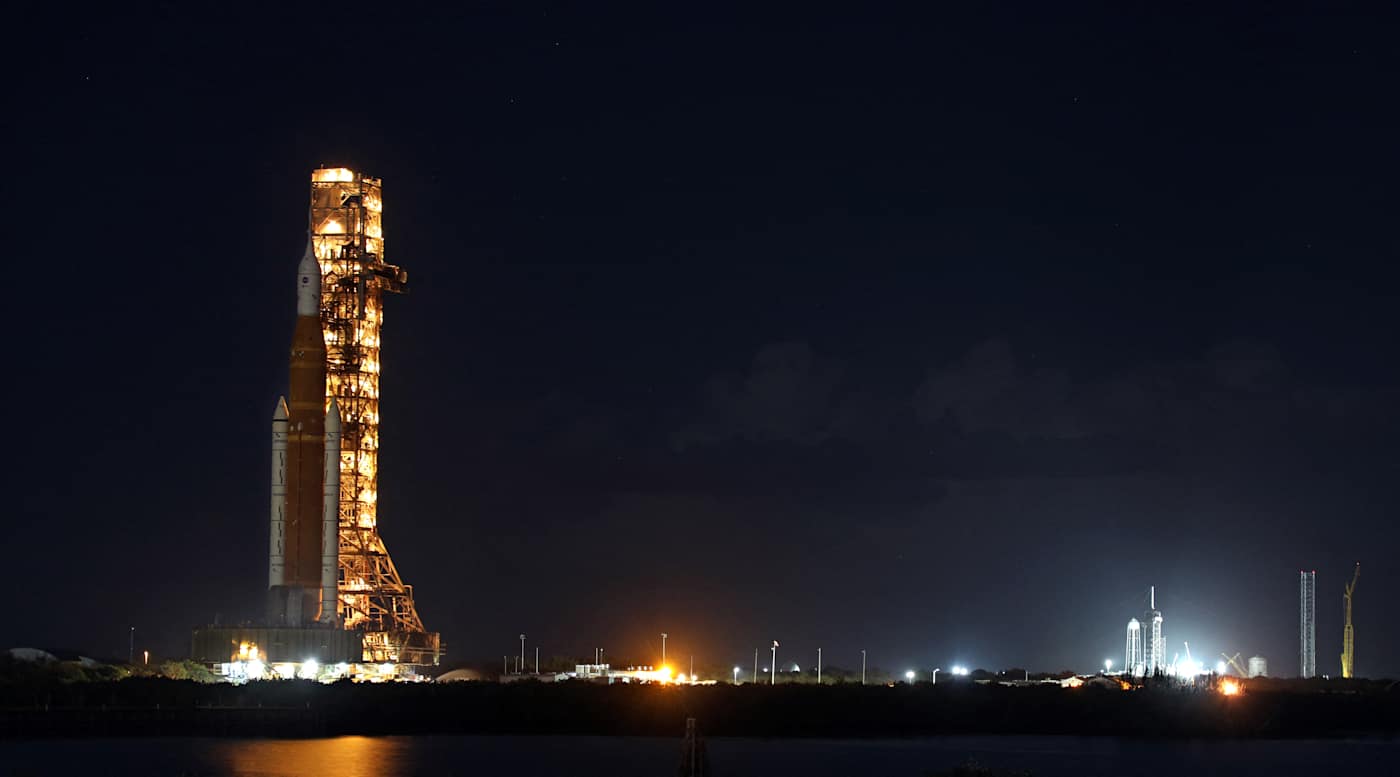
Lawmakers also rejected Trump's effort to scuttle the Space Launch System after its third flight. NASA's heavy-lift rocket is billions of dollars over budget, but remains — as of now — the only spacecraft ready to ferry astronauts to the Moon. Compared to the rest of NASA, the fate of the SLS was never really in doubt. Senator Ted Cruz (R-TX) secured funding for the rocket as part of Trump's Big Beautiful Bill. "I've been saying for a long time you should never underestimate the political coalition behind the SLS, and I think that was very much validated this yea
Source: Engadget