Steam Frame's Vision Is Only Black And White And That Could Be A...
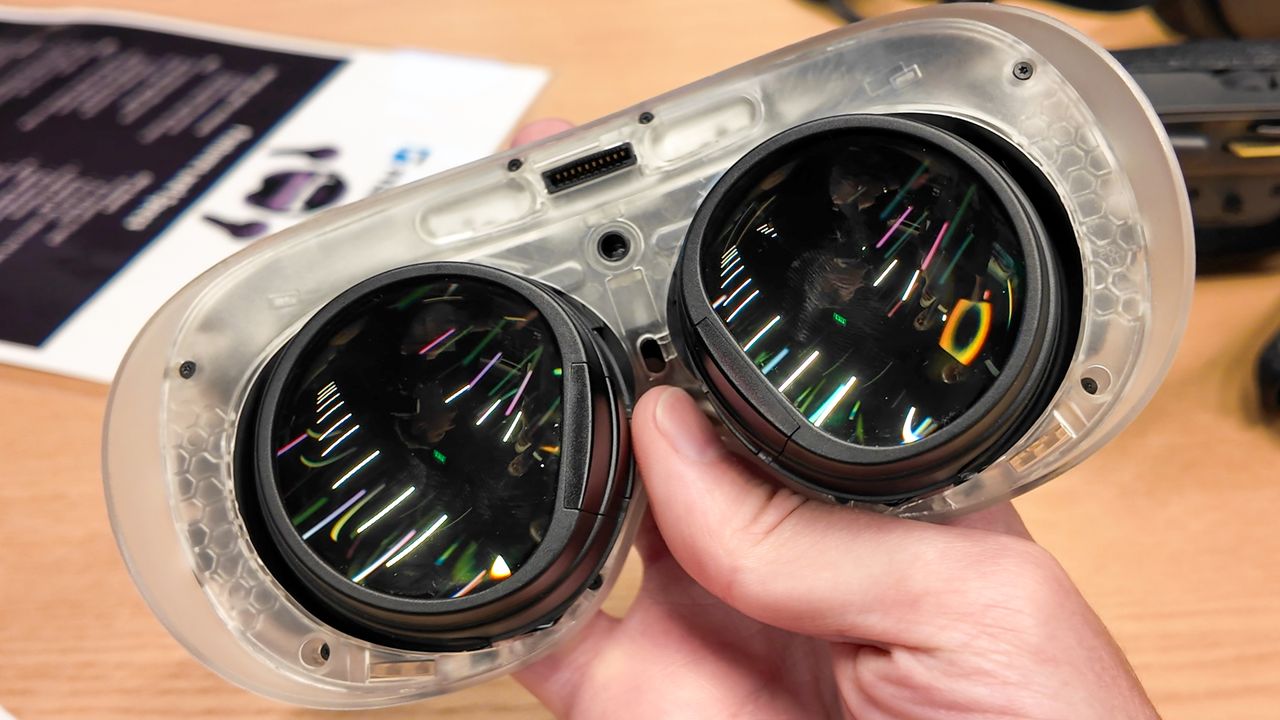
Accurate passthrough is a boon for everyday VR use.
I am very excited about the Valve Steam Frame. It's packed with a beefier processor, higher-capacity RAM, and a better Wi-Fi chip than Meta's top device, the Meta Quest 3, and this all makes me think Valve has the guts to step into the ring with the company previously known as Facebook.
This is before mentioning that Valve seems to have a bit of a hidden blade up its sleeve in the form of an included USB dongle that connects to a specially sectioned antenna in the headset for wireless streaming. This, combined with foveated streaming, means that the headset can pick up on where you're looking, focus all of the higher quality juice into that section, and render everything at a lower quality.
And that's not the only selling point for the Steam Frame. Valve's Lawrence Yang told us it "represents a fundamental shift in the way that we look at VR." For the first time, SteamOS is on an Arm chip in the Frame. It can wirelessly connect to your rig to play your VR games, but also play non-VR games through the same controllers. It's all hitting the right notes for me.
However, in my excitement for the new headset, I spotted a single note in the specs sheet that dampens it somewhat: Mono passthrough. This means that, where my Quest 3 has a relatively lifelike vision in technicolor when I'm wandering around or messing with its UI in my real space, the Frame may feel a bit stilted.
One of the most instantaneous upgrades I felt when swapping from the Quest 2 to the Quest 3 was the upgrade in passthrough capability, and it really does improve moment-to-moment use and set-up.
I've always found navigating my real-life environment a bit tough in previous headsets, but a quick tap on the side of the head to activate passthrough mode has made the Quest 3 a surprisingly viable headset to wear when untangling wires or otherwise interacting with my space. I can get myself a drink without a little bit of nausea (or taking an age), which was never true of Meta's previous iterations.
The Steam Frame has the same number of cameras as the Quest 3, though Meta employs two RGB passthrough cameras and four IR cameras, whereas Valve uses four monocular home computer vision tracking cameras and two interior eye tracking cameras.
Keep up to date with the most important stories and the best deals, as picked by the PC Gamer team.
So, it seems like part of the tradeoff here is eye tracking or better passthrough. The monochrome camer
Source: PC Gamer