Technology Ip Firm Files Lawsuits Against Amd For 'its Extensive...
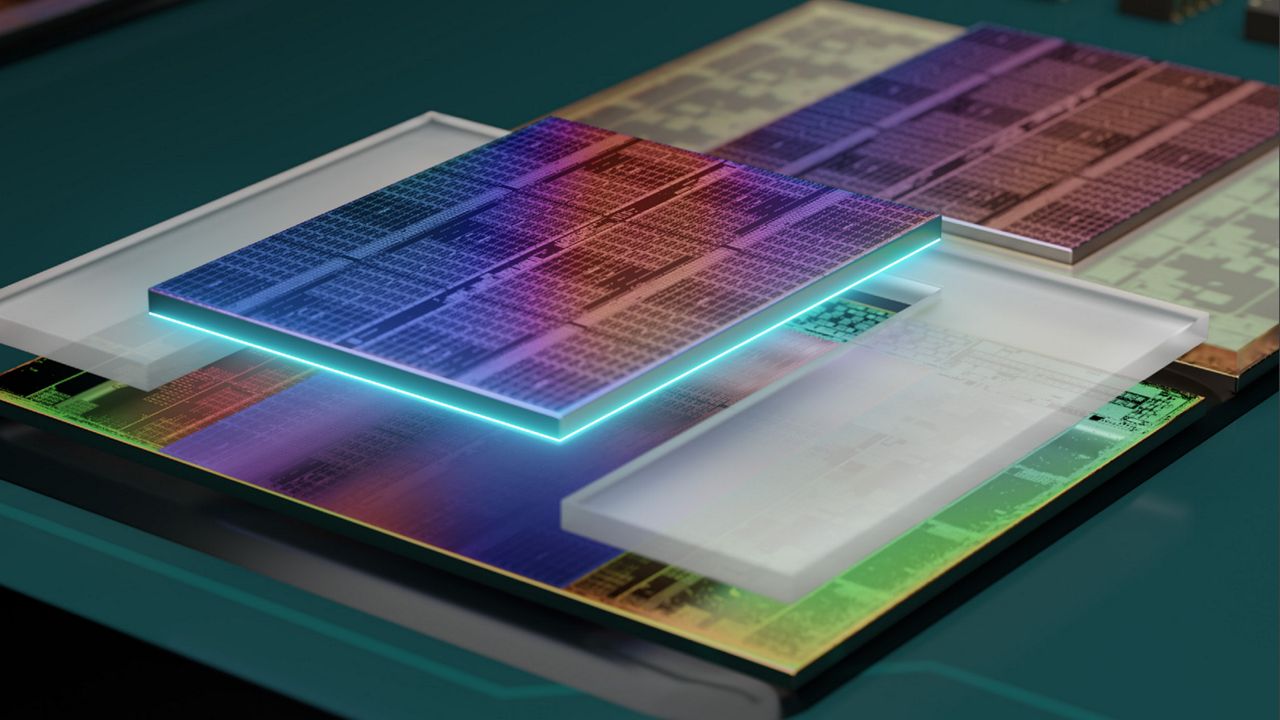
It might be TSMC's tech being used, but it's AMD that's getting the blame.
For PC gamers, AMD's Ryzen chips are the processors of choice, but they're also hot stuff for servers, workstations, and all kinds of portable devices. It's not just the power of the Zen architecture that makes them so good; it's the use of chiplets, 3D V-Cache, and how they're all connected that makes them the best CPUs around. However, a technology licensing firm is now claiming that AMD's designs have been achieved thanks to its patented ideas, and it's suing the chip giant for "its extensive and unauthorized use of [the firm's] semiconductor portfolio."
The company in question is Adeia, and it announced the lawsuits in a recent press release. Technology licensing isn't something new, of course, and it's been around for as long as chips have. The same is true of intellectual property (IP) lawsuits, but there are a few things that make this move more newsworthy than others.
Adeia is claiming that "AMD infringes ten patents from Adeia's semiconductor intellectual property (IP) portfolio—seven patents covering hybrid bonding technology and three patents covering advanced process node technology." An example of one such patent can be read here, filed in 2018 and granted in 2020.
That's for a '3D processor,' where different types of chips can be formed by layering various dies in a stack. One die might be nothing but cache, or it could contain all of the input/output (IO) circuitry. If that sounds a bit familiar, then you'd be right, as that's exactly how AMD's Ryzen X3D chips are built: a Level 3 cache die is stacked on top of or underneath the main core complex die (CCD).
AMD's first implementation of this was the Ryzen 7 5800X3D, announced in March 2022 and launched a month later. So-called hybrid bonding is key to making it work, and while TMSC is responsible for manufacturing the dies and fully packaged chips, almost certainly using its SoIC service, Adeia is essentially targeting the end product and its producer, because it's the part of the whole chain that it's most likely to succeed at suing.
It claims that "[a]fter prolonged efforts to reach a mutually agreeable resolution without litigation, we believe this step was necessary to defend our intellectual property from AMD’s continued unauthorized use." Adeia doesn't specify how long it's been trying to arrange a licensing agreement with AMD, and the latter hasn't made any public statements about the lawsuits yet.
Adeia
Source: PC Gamer