Todd Howard Says AI Can't Replace Human 'creative Intention,' But...
Maybe he should've said Office. No, wait. Gmail? No, hold on.
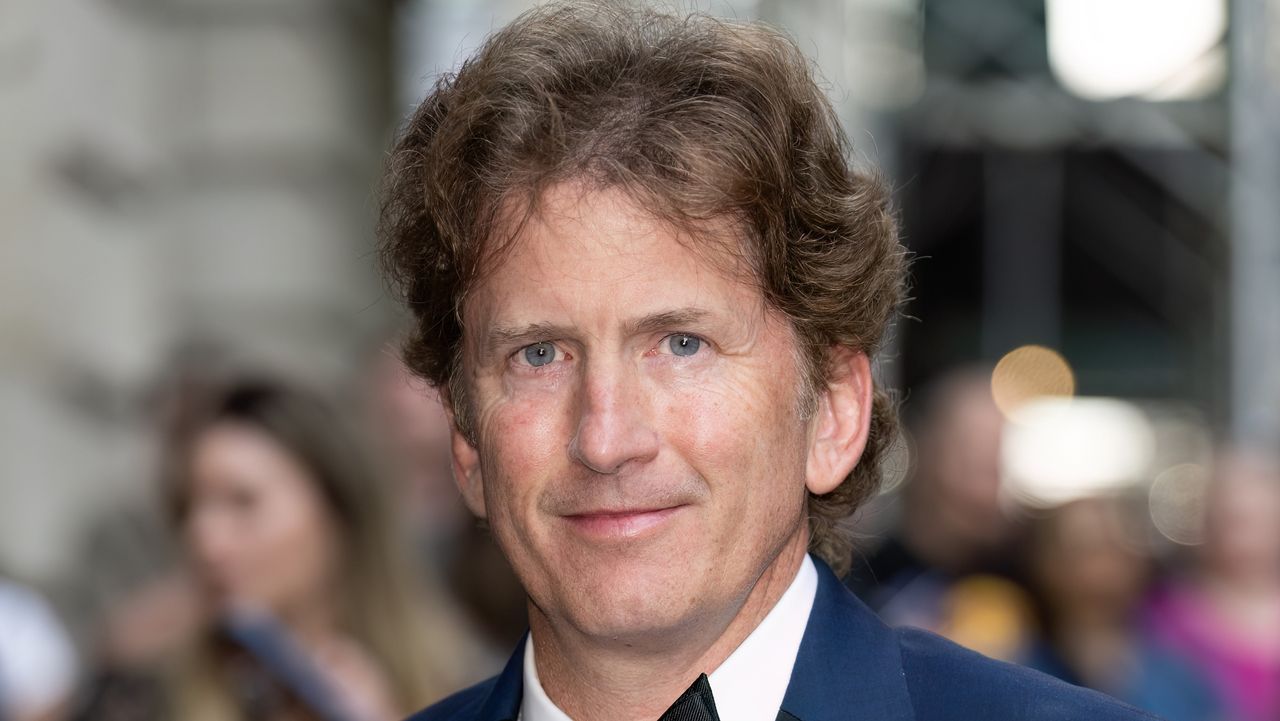
During a recent event for the second season of the Fallout TV show that premiers later this month, Bethesda's Todd Howard joined the press junket fray to talk about the lasting influence of New Vegas, skipping the "war never changes" refrain, and—in an interview with Eurogamer—the use of AI in game development.
"I view it as a tool. Creative intention comes from human artists, number one," Howard said. "But I think we look at it as a tool for, is there a way we can use it to help us go through some iterations that we do ourselves faster?"
As most recently demonstrated by publisher Running With Scissors' thermonuclear 48-hour Postal flameout, AI remains a hotly contested topic in the games industry. Some think we'd better all just get used to it, like Epic CEO Tim Sweeney, who insists that "AI will be involved in nearly all future production." Others have a less enthusiastic view, like Rockstar co-founder Dan Houser, who likened it to a tech equivalent of mad cow disease being pushed by "a certain group of people, who maybe aren't fully-rounded humans."
Howard, it seems, falls somewhere in the middle alongside figures like Take-Two CEO Strauss Zelnick, who in October said he expected AI will "probably be able to create a bunch of efficiency," but won't ultimately "recreate or create genius."
Bethesda, Howard said, isn't using AI for "generating things." But the studio and publisher considers it as merely the latest addition to evolving development practices and standards.
"We are always working on our toolset for how we build worlds or check things. I think if you go back 10 years ago, that version of Photoshop, you wouldn't want to go back to that version of Photoshop," Howard said. "That's our view on it. But we want to protect the artistry. The human intention of it is what makes our stuff special."
It could be tempting to ask how generative AI could "protect the artistry" when it often relies on bodies of training data that incorporates—or "steals," depending on your inclination—art without the permission of its creators. But it's possible that Howard's referencing applications of machine learning and automation tech that are now being colloquially lumped in with LLM and gen-AI software, despite predating the recent AI boom.
Keep up to date with the most important stories and the best deals, as picked by the PC Gamer team.
The widespread muddying of what is and is not AI is one of th
Source: PC Gamer