Valve Recommends Sharing Your Game Library On Microsd Card Between...
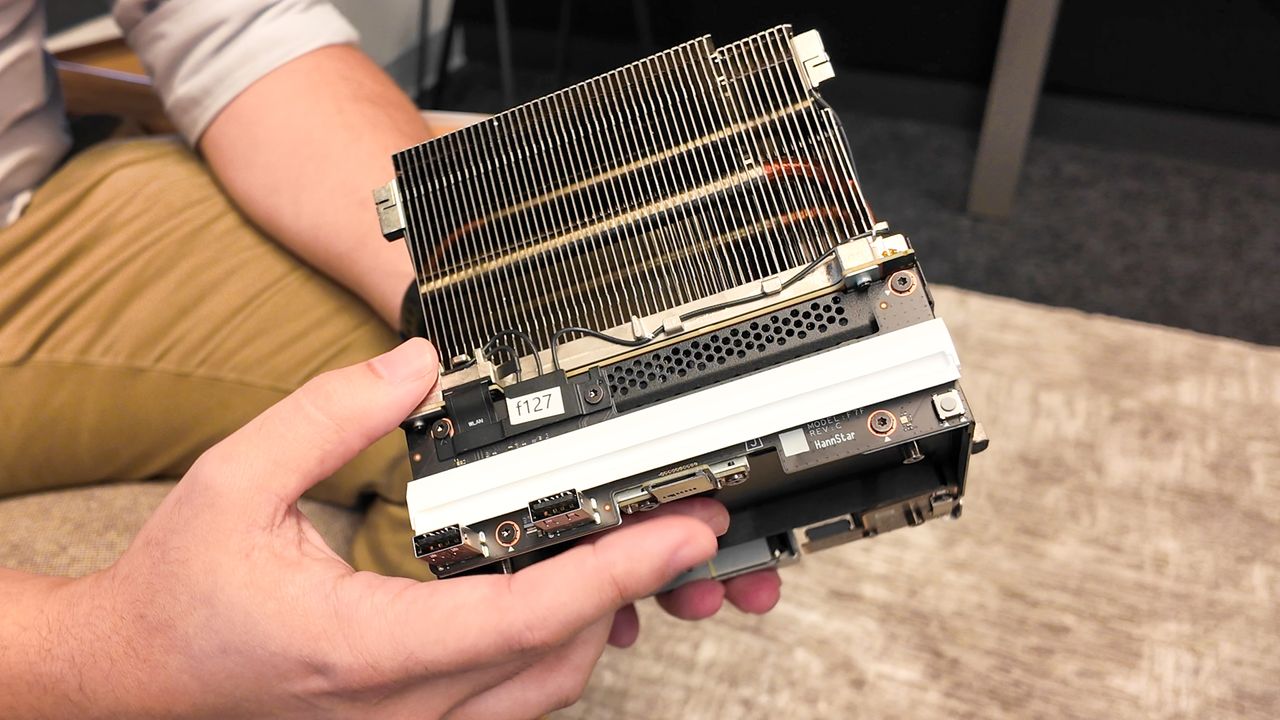
Valve is building out its own ecosystem of products with the announcement of the Steam Machine and the Steam Frame, joining its ranks of Linux-powered devices alongside the Steam Deck. While they run the gamut from handheld to headset, they have one common feature: a microSD card slot.
Located in the strap of the Steam Frame, on the front of the Steam Machine, and beneath the screen on the Steam Deck, this microSD card slot allows for easy transfers of games between devices. According to Valve, it's simply plug and play. If you have a bunch of games installed on your Steam Deck's card and you plug that into the Steam Machine, voila, all your games are now available there.
"You can take your catalogue from your Steam Deck or from your Steam Machine, and they're fully interoperable, so you can plug it in here and just bring it along with you," Jeremy Selan, an engineer on the Steam Frame, says.
All three devices support up to 2 TB of SDXC storage via the microSD card slot, and Valve tells me that game performance is good enough even from the compact storage medium.
"We think you get a really good experience with SD cards. Game load time/boot time is still really good, and that's really the easiest option," Yazan Aldehayyat, a Valve engineer working on the Steam Machine, says. "It's what we recommend for most people."
You don't need a microSD card, each device comes with storage, though it's noted as the easiest way to upgrade your storage as on both the Steam Deck and Steam Machine, you would have to clone the existing 2230 SSD to replace it with a higher capacity model.
We don't know the price for the Steam Machine or Steam Frame yet, so it's yet to be determined whether buying a higher storage option is a better deal than a comparative microSD card or not. However, the Steam Deck OLED with 1 TB of storage costs $100 more than the Steam Deck OLED with 512 GB of storage, more expensive than a 512 GB microSD card (around $30–50).
So, you probably are better off with the microSD option in terms of value, due to just how affordable these cards are, though you will suffer in terms of load speeds in some games. The Steam Deck's NVMe drive isn't particularly fast compared to the best SSDs for gaming, but it's much faster than a microSD card.
Steam Frame: Valve's new wireless VR headsetSteam Machine: Compact living room gaming boxSteam Controller: A controller to replace your mouse
There are other ways that these devices come together as one family. Most i
Source: PC Gamer