Wall Street Journal Investigation Claims To Have Tracked How 2,300...
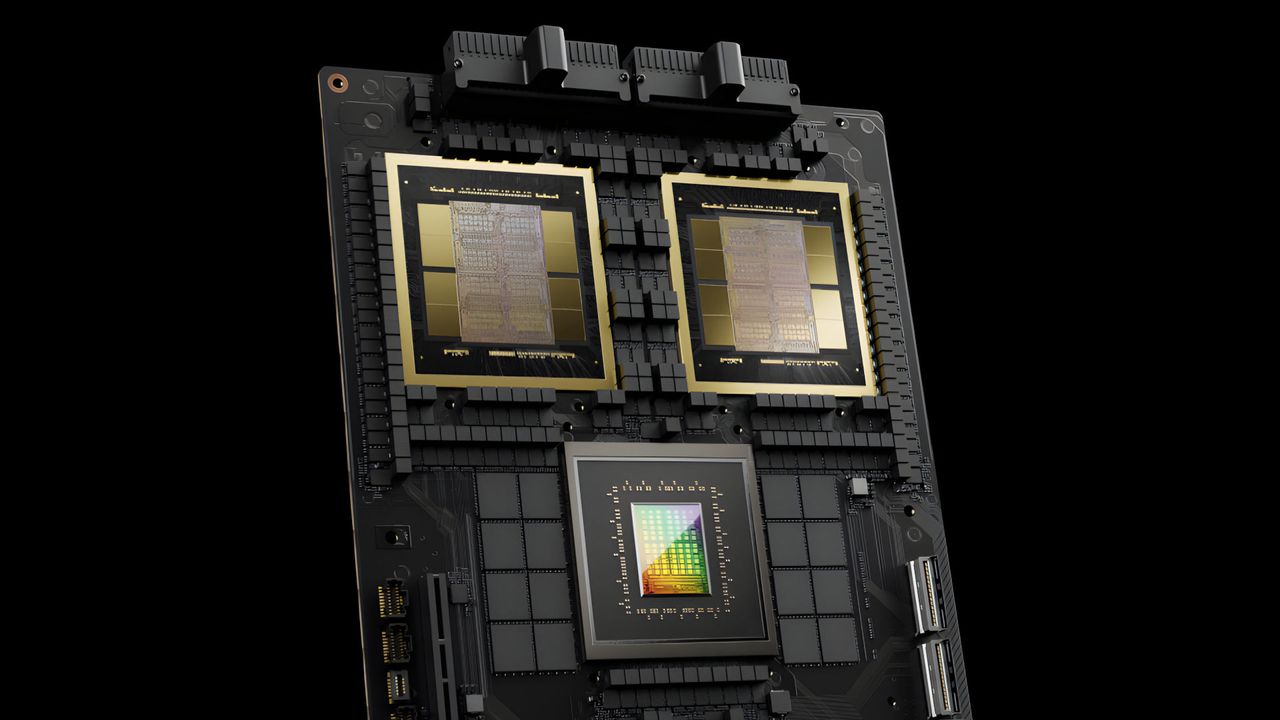
While there has been a cooling off of the rhetoric surrounding trade relations between the US and China over the past few weeks, after US President Donald Trump and Chinese President Xi Jinping met in South Korea last month, Nvidia's high-end Blackwell GPUs were not part of the discussions.
Existing chip export restrictions preventing Nvidia from selling its top-end hardware to China remain, but The Wall Street Journal claims it has traced how 32 Nvidia GB 200 server racks, containing 2,300 Blackwell chips, made their way to China via an Indonesian company—eventually ending up in the hands of a Chinese AI tech provider.
According to the WSJ, the chips were bought from Nvidia by Silicon Valley-based AI server manufacturer Aivres, which operates under a parent company that is one-third-owned by Inspur, a Chinese company that was added to the US government's trade blacklist in 2023, over claims that it worked on Chinese military supercomputing projects.
Aivres went on to sell the 32 Nvidia GB200 server racks to an Indonesian telecoms company, Indosat Ooredoo Hutchison, the WSJ claims, for around $100 million. According to its sources, Indosat bought the servers after securing Shanghai-based AI startup INF Tech as a client, with Aivres' help.
INF Tech was founded by Professor Qi Yuan, the head of the AI institute at Fudan University. Yuan's representatives were said to be part of the negotiations, although INF is claimed to have ultimately signed the contract for the AI server deal.
The WSJ's sources say the servers were delivered to Chinese shores and installed in October, with their ultimate purpose being the training of AI models for financial applications and scientific research.
Speaking to the outlet, Thea Kindler, former US assistant secretary of commerce for export under the Biden administration, said that a rule created in the last days of its tenure, designed to tighten controls over the sale of advanced US chips to China, would have given the US a chance to scrutinize customers buying chips, not just the exporter.
Keep up to date with the most important stories and the best deals, as picked by the PC Gamer team.
However, the Trump administration later said it wouldn't enforce the rule, which means "the [US] government is pushing it on the companies to do their own due diligence."
Lawyers familiar with export controls told the WSJ that the arrangement comports with current US export restrictions.
Source: PC Gamer