$ import requests # Define parameters for the API call topic = 'artificial intelligence' score = -0.190 confidence = 0.85 momentum = +0.475 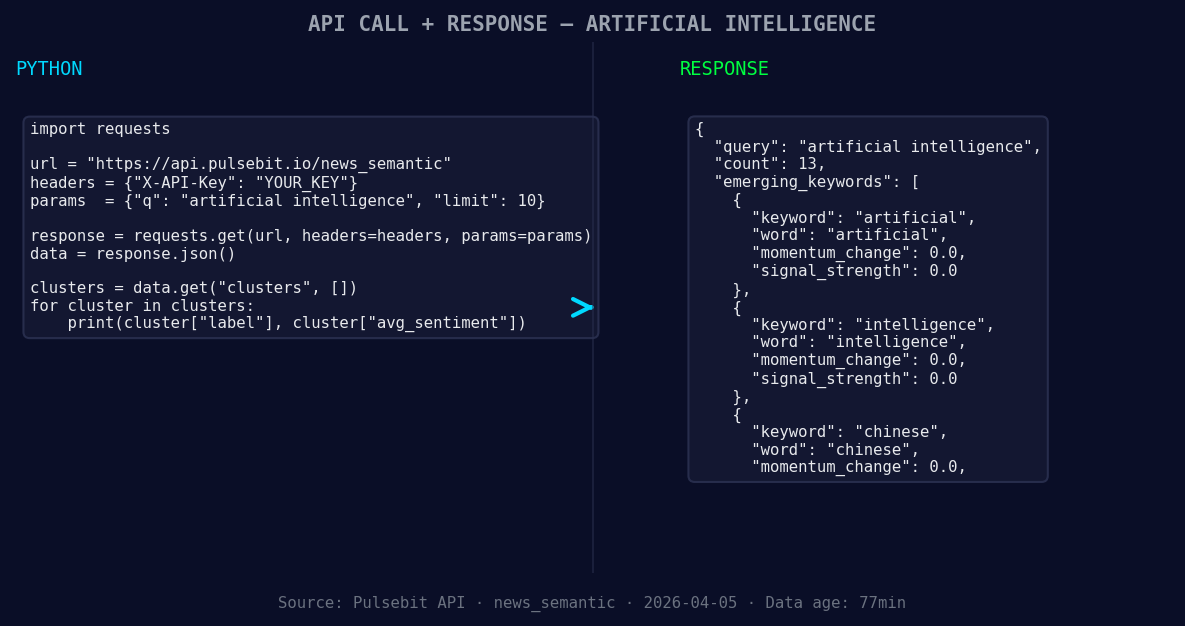 *Left: Python GET /news_semantic call for 'artificial intelligence'. Right: returned JSON response structure (clusters: 3). Pulsebit /news_semantic.* # Query by language/country using param "lang": "en" response = requests.get("https://api.pulsebit.com/v1/sentiment", params={ "topic": topic, "lang": "en" }) 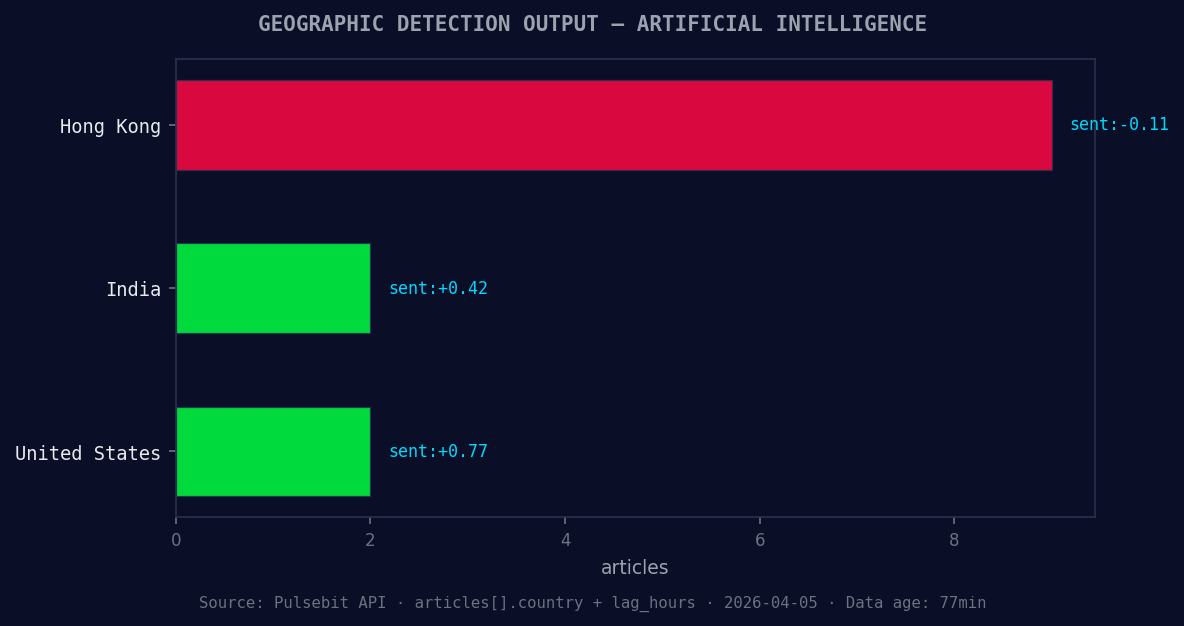 *Geographic detection output for artificial intelligence. Hong Kong leads with 9 articles and sentiment -0.11. Pulsebit /news_recent geographic fields.* # Process the response data = response.json() print(data) # Meta-sentiment moment: run the cluster reason string back through POST /sentiment cluster_reason = "Clustered by shared themes: chinese, kass, peers, adoption, corporate." meta_response = requests.post("https://api.pulsebit.com/v1/sentiment", json={ "text": cluster_reason }) # Process the meta sentiment response meta_data = meta_response.json() print(meta_data) COMMAND_BLOCK: import requests # Define parameters for the API call topic = 'artificial intelligence' score = -0.190 confidence = 0.85 momentum = +0.475  *Left: Python GET /news_semantic call for 'artificial intelligence'. Right: returned JSON response structure (clusters: 3). Pulsebit /news_semantic.* # Query by language/country using param "lang": "en" response = requests.get("https://api.pulsebit.com/v1/sentiment", params={ "topic": topic, "lang": "en" })  *Geographic detection output for artificial intelligence. Hong Kong leads with 9 articles and sentiment -0.11. Pulsebit /news_recent geographic fields.* # Process the response data = response.json() print(data) # Meta-sentiment moment: run the cluster reason string back through POST /sentiment cluster_reason = "Clustered by shared themes: chinese, kass, peers, adoption, corporate." meta_response = requests.post("https://api.pulsebit.com/v1/sentiment", json={ "text": cluster_reason }) # Process the meta sentiment response meta_data = meta_response.json() print(meta_data) COMMAND_BLOCK: import requests # Define parameters for the API call topic = 'artificial intelligence' score = -0.190 confidence = 0.85 momentum = +0.475  *Left: Python GET /news_semantic call for 'artificial intelligence'. Right: returned JSON response structure (clusters: 3). Pulsebit /news_semantic.* # Query by language/country using param "lang": "en" response = requests.get("https://api.pulsebit.com/v1/sentiment", params={ "topic": topic, "lang": "en" })  *Geographic detection output for artificial intelligence. Hong Kong leads with 9 articles and sentiment -0.11. Pulsebit /news_recent geographic fields.* # Process the response data = response.json() print(data) # Meta-sentiment moment: run the cluster reason string back through POST /sentiment cluster_reason = "Clustered by shared themes: chinese, kass, peers, adoption, corporate." meta_response = requests.post("https://api.pulsebit.com/v1/sentiment", json={ "text": cluster_reason }) # Process the meta sentiment response meta_data = meta_response.json() print(meta_data) - Real-Time Alert System: Set a threshold for sentiment momentum spikes. For instance, any spike above +0.400 in the "artificial intelligence" topic should trigger an alert. Use the geo filter in your query to focus on English language articles, ensuring you capture the most relevant insights. - Meta-Sentiment Dashboard Widget: Create a dashboard widget that visualizes the narrative sentiment based on the cluster themes. For instance, track how the themes of "chinese," "kass," and "peers" evolve over time. Use the meta-sentiment loop to score these narratives dynamically, providing you with a continuously updated perspective. - Sentiment Comparison Tool: Build a tool that compares sentiment scores across different geographical regions. For example, assess how sentiments around AI adoption differ between China and the US. Use the geo filter to segment your analysis, then evaluate how themes like "artificial," "intelligence," and "chinese" resonate within these distinct contexts.