Gaming: This Creator Extraordinaire Has Built A Gaming PC Attached To A...
Keep up to date with the most important stories and the best deals, as picked by the PC Gamer team.
Your weekly update on everything you could ever want to know about the games you already love, games we know you're going to love in the near future, and tales from the communities that surround them.
Our special GTA 6 newsletter, with breaking news, insider info, and rumor analysis from the award-winning GTA 6 O'clock experts.
From the creators of Edge: A weekly videogame industry newsletter with analysis from expert writers, guidance from professionals, and insight into what's on the horizon.
Hardware nerds unite, sign up to our free tech newsletter for a weekly digest of the hottest new tech, the latest gadgets on the test bench, and much more.
Sign up to our new Switch 2 newsletter, where we bring you the latest talking points on Nintendo's new console each week, bring you up to date on the news, and recommend what games to play.
Get sneak previews, exclusive competitions and details of special events each month!
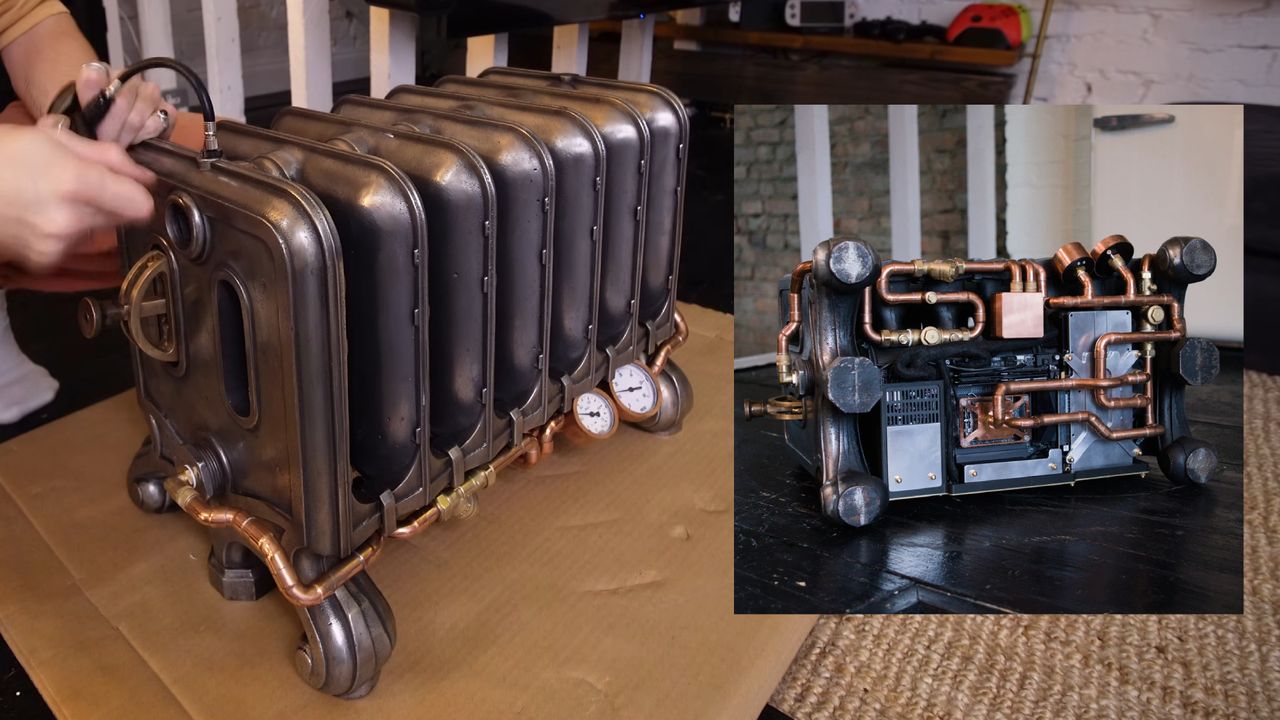
I see custom PC builds pass through my newsfeed all the time, and my usual reaction is "meh". One I've been keeping an eye on for a while now, though, has finally reached its conclusion, and it's such an extreme build that I'm in absolute awe of its creation.
Billet Labs has released a video chronicling their efforts to create a custom PC integrated underneath a Victorian cast-iron radiator. That would be less impressive if the PC itself was merely strapped to the bottom frame, but no, it goes one step further. The radiator functions as the main heat exchanger for the cooling system, which means it's a fully-functional, liquid-cooled, steampunk-eat-your-heart-out gaming machine.
The unfilled radiator itself was initially estimated to weigh 50 kg, or as Billet Labs puts it, "catastrophically heavy". As it's a cast iron unit, it's also prone to internal rust, which proved to be a thorn in our intrepid builder's side throughout the project.
Source: PC Gamer